
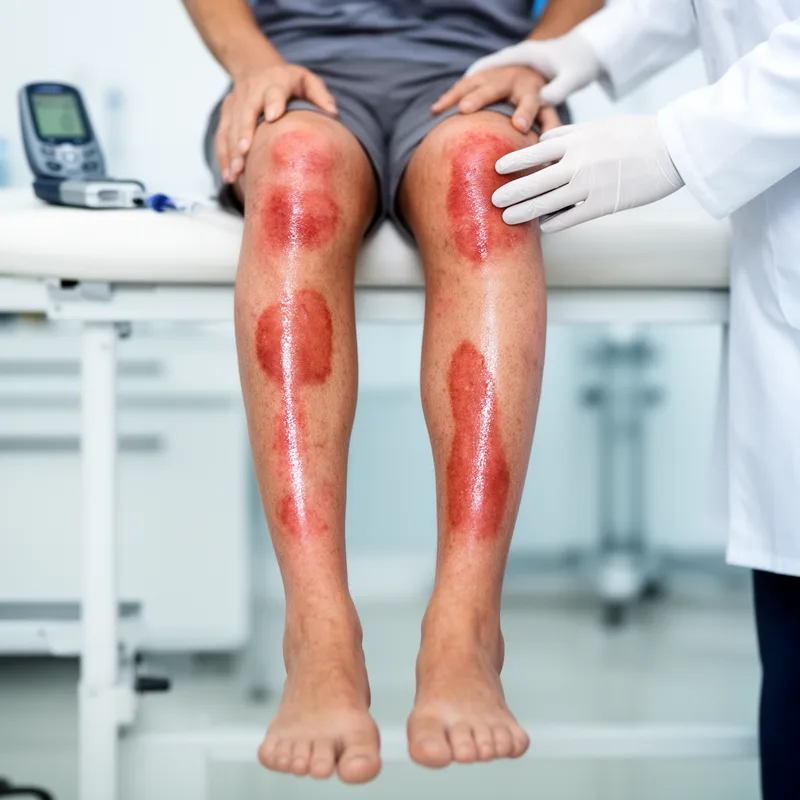
necrobiosis lipoidica
- noun
- /ˌnɛkrəˈbaɪəsɪs lɪˈpɔɪdɪkə/
- Specialized
- The dermatologist diagnosed the shiny patches on his legs as necrobiosis lipoidica.
Examples
-
Patients with diabetes are more likely to develop necrobiosis lipoidica than those without the condition.
-
Although rare, necrobiosis lipoidica can sometimes lead to ulcers if left untreated.
-
Patients with necrobiosis lipoidica often experience skin changes.
-
She was diagnosed with necrobiosis lipoidica last year.
-
Patients with diabetes are more likely to develop necrobiosis lipoidica, a rare skin disorder with shiny patches.
-
The dermatologist diagnosed her condition as necrobiosis lipoidica, which often appears on the legs.
-
Although uncommon, necrobiosis lipoidica can cause significant skin issues if not properly managed.
Synonyms

A rare skin condition with thin shiny yellow patches on the lower legs that often affects people with diabetes
Surface Forms
Morphology
necrobiosis + lipoidica
The compound is directly built from medical roots: 'necrobiosis' (cell death) plus 'lipoidica' (fat- or lipid-related), so a learner who knows both constituents can infer it denotes a pathological process involving lipid-related cell death — plausibly a skin disorder. Although the term is technical and rare, its meaning follows standard Latin/Greek medical composition, making it predictable for someone who understands the constituent meanings.
Etymology
Necrobiosis lipoidica is a medical name from old Greek words: necro- means 'death' and lipoidica means 'fat-like'. That's why the name paints a picture of skin cells dying and thin, shiny patches that look a bit like fat under the skin, so it describes the damaged leg patches often linked to diabetes.

