
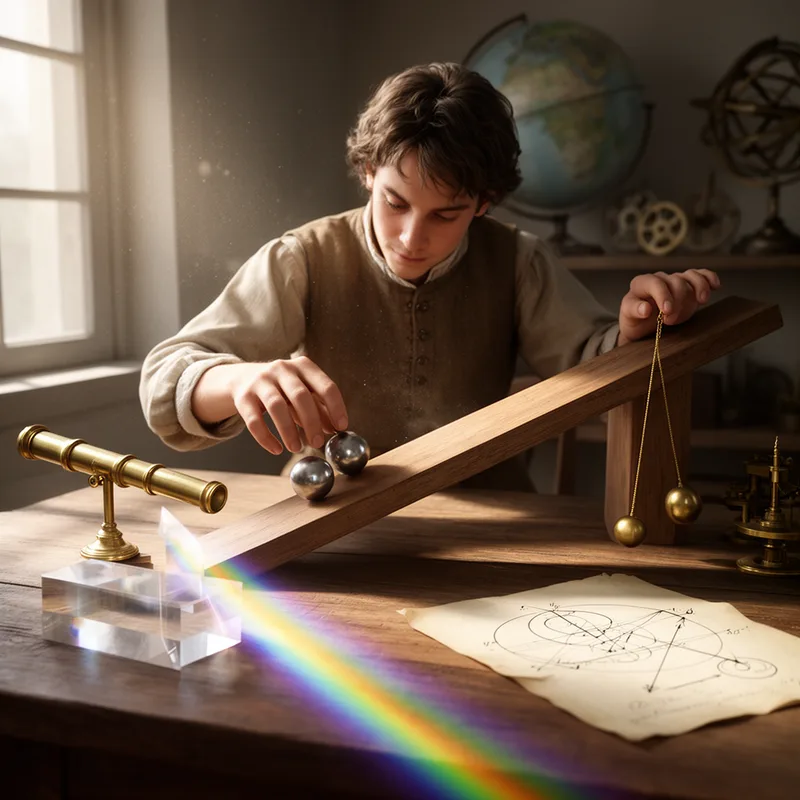
natural philosophy
 2
8.4
2
8.4

- noun
- /ˈnæʧərəl fəˈlɑsəfi/
- Archaic
- Swift's irony is aimed at a common claim made by natural philosophers during the decade after the foundation of the Royal Society in 1660.
- Aristotelian natural philosophy
- experimental natural philosophy
- Renaissance natural philosophy
Loading YouTube…
Watch on YouTubeSo he says that, you know, without studying natural philosophy to some degree, we're probably going to be a bit handicapped in this.
- So he says that, you know, without studying natural philosophy to some degree, we're probably going to be a bit handicapped in this.
- He's Homewood Professor of natural philosophy at Johns Hopkins University and fractal fractal faculty at the Santa Fe Institute.
Examples
-
Enlightened intellectuals used reason to question the world and their legacy was radical politics, iconoclastic art and natural philosophy, or science.
-
Around 250 BC, the Greek natural philosopher Aristarchus of Samos worked out the distance of the Moon and its size.
Academic text (2003) -
Included on the list were works of history, natural philosophy, agriculture, politics, and law.
Academic text (2004) -
What would the study of such causes, natural causes, be called, if not natural philosophy?
Blog text (25) -
Anthony had assured him that everything they did had a basis in natural philosophy.
Fiction book (1993) -
There were no notable additions to Greek natural philosophy until the Middle Ages.
Blog text (19) -
The doctor of physics was to hold discussions with a natural philosopher to try and answer the riddles of nature.
Academic text (1991) -
The natural philosopher Avicenna introduced the first multidimensional color scale in the 10th century.
Academic text (2003) -
The earliest system considered is that of Xenophanes, a natural philosopher who lived in the 6th century BCE.
Academic text (2003) -
In the 19th century, many scholars believed that natural philosophy encompassed both science and philosophy.
Synonyms
 611
2.5
611
2.5
The study of matter, energy, and how they interact
 6
3.4
6
3.4
A branch of science that studies the physical world, like physics and biology
Surface Forms
Morphology
The phrase combines 'natural' (relating to nature) with 'philosophy' (the study or inquiry into fundamental questions), so a learner who knows both words can infer it means the study or theory of nature/the natural world. While the term has an archaic, technical sense referring to early natural sciences (physics), the basic compositional meaning is directly derivable from the constituents.
Etymology
Natural philosophy comes from joining natural (about nature) and philosophy (literally 'love of wisdom'), so it paints a picture of people using thought to study the world. That's why it used to mean the study of the physical world, what we now call 'science'.