
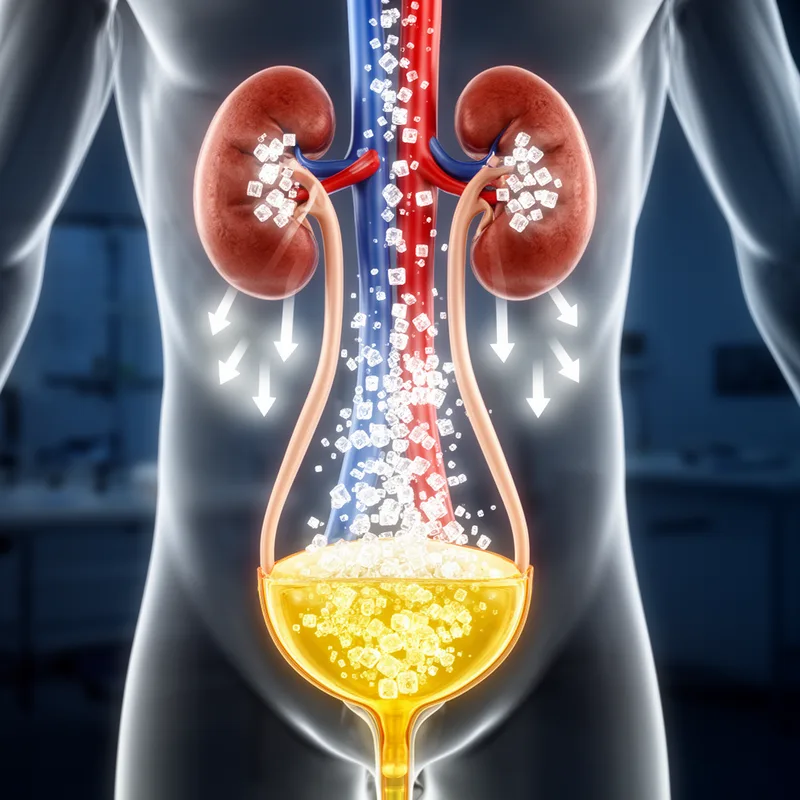
natriuresis
9.9
The body removes a large amount of salt in the urine
- noun
- /ˌnætrɪˈjʊərɪsɪs/
- Specialized
:
natriduría
- Diuretics should be given only if they cause a significant natriuresis (i.e., urine sodium excretion of more than 30 mmoles daily).
Examples
-
The patient's natriuresis increased after starting the new medication, resulting in more frequent urination.
-
During her treatment, the doctor monitored her natriuresis closely to assess her sodium levels.
-
High levels of natriuresis can indicate kidney function issues or a response to certain treatments.
Surface Forms
natriuresis singular
natriureses plural
Morphology
natriuresis = natrium (opaque) = natri + uresis
The term is built from technical combining forms natri- (sodium) + -uresis (urination); these medical elements are not transparent to an average B1 learner.
Etymology
The word natriuresis breaks into natri- meaning 'sodium', like 'salt', and -uresis meaning 'urine' or 'making urine'. So, natriuresis is when the body gets rid of a lot of sodium in the urine.

