
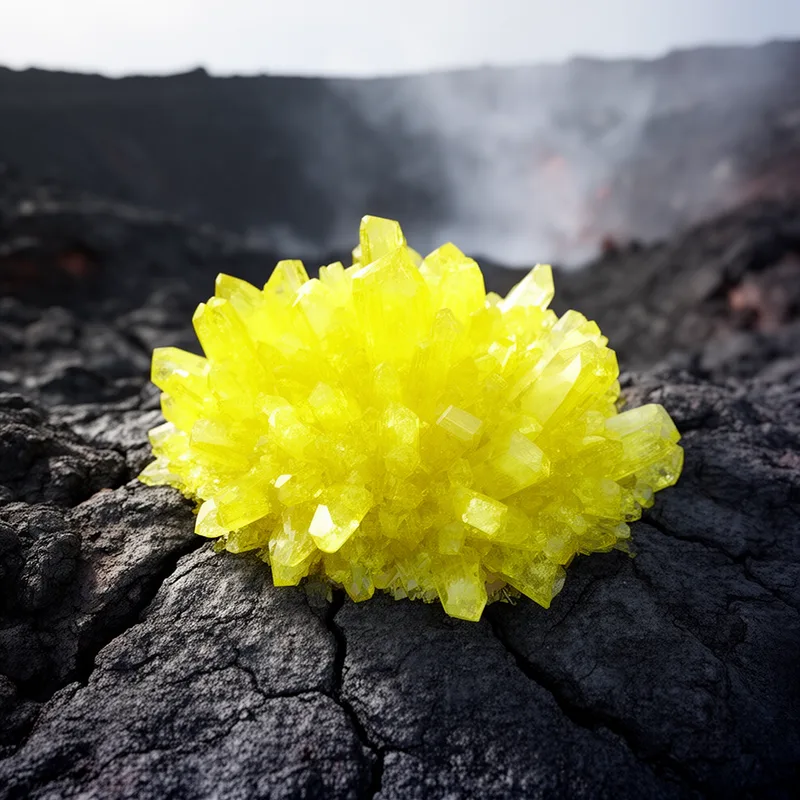
native sulphur
- noun
- /ˈneɪtɪv ˈsʌlfər/
- Archaic
- Miners extracted native sulphur directly from volcanic deposits.
Examples
-
The crystals in the cave turned out to be native sulphur formed over thousands of years.
-
Many volcanic regions contain native sulphur in abundance.
-
In the laboratory, native sulphur samples are prized for their purity and bright yellow color.
-
The geologist discovered native sulphur deposits in the valley.
-
Miners extracted native sulphur directly from volcanic deposits.
-
In the laboratory, native sulphur samples are prized for their purity and bright yellow color.
-
The geologist discovered native sulphur deposits in the valley.
Synonyms

 60
2.3
60
2.3

A yellow element used in industry and needed by living things
 19
9.9
19
9.9
A yellow, strong-smelling substance that is an old name for sulfur in religious texts
Surface Forms
Morphology
The meaning is directly compositional: 'native' (occurring naturally or in an uncombined/elemental state) modifies 'sulfur', so the phrase denotes sulfur in its natural, elemental form. This follows a standard adjective+noun pattern and is likely readily understood by a B1 learner who knows both words, even if the term is somewhat technical or dated.
Etymology
Native sulphur gets its name from old mining language where native meant 'found in nature' and sulphur is the yellow element. Miners and early scientists used the term for sulphur taken straight from the ground, not mixed with other elements, so it means 'sulphur in its natural form'.