

naive art
- noun
- /nɑːˈiv ɑrt/
- Her collection of naive art includes playful scenes that remind viewers of childhood joy and creativity.
Examples
-
In many cultures, naive art captures everyday life through simple and colorful representations.
-
In addition to focusing on the colonial origins of portrait painting as well as four individual painters, Copley, West, John Trumbull, and Ralph Earl, Neumeyer devoted a chapter to naive art.
Academic text (2001) -
The vibrant landscapes displayed in the gallery are an example of naive art, reflecting the artists' innocent perspective.
Synonyms

 2
7.2
2
7.2

Creative work made by self-taught people outside the normal art world


 1
6.7
1
6.7
Work made by people without formal art training in a simple, direct style

Work that people make without formal art training like paintings or sculptures
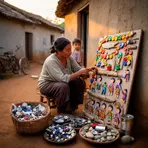
Art made by people without formal training that shows local traditions and everyday life
Antonyms

- Specialized
1
9.4
The view that the form and structure of art matter more than the message
How Childlike

- Specialized
1
6.7
7
3.9
- Specialized
Surface Forms
Morphology
This is a simple adjective + noun composition: 'naive' (childlike, self-taught) modifies 'art', so a learner who knows both words can infer it refers to art with a naive or childlike style or made by untrained artists. The compositional ADJ+NOUN pattern is common cross-linguistically and therefore readily understandable to a B1 learner.
Etymology
Naive art comes from the image of artists who were not trained. Their pictures often look fresh and 'childlike', like drawings made without rules. That's why naive in naive art suggests 'without formal training' and the phrase now means art made by people with a simple, honest style.