

nagami kumquat
- noun
- /nəˈɡɑːmi ˈkʌmkwɑːt/
- Specialized
- The nagami kumquat is prized both for its tangy fruit and its decorative appeal in gardens.
Examples
-
Unlike other citrus trees, the nagami kumquat tolerates cooler temperatures well.
-
She planted a nagami kumquat in her backyard to enjoy fresh citrus snacks in the winter.
-
The nagami kumquat tree is a beautiful addition to any garden.
-
I bought a nagami kumquat plant last spring.
-
She planted a nagami kumquat in her backyard to enjoy fresh citrus snacks in the winter.
-
The nagami kumquat is prized both for its tangy fruit and its decorative appeal in gardens.
-
Unlike other citrus trees, the nagami kumquat tolerates cooler temperatures well.
Synonyms
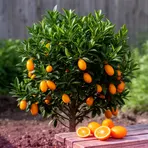
A small evergreen bush that grows oval orange fruits you can eat

A small orange fruit from a shrub that you can eat whole

A small bush from East Asia that has oval kumquats with edible skin and a sweet-tart taste
Surface Forms
Morphology
The phrase is a straightforward noun–noun compound where 'nagami' names a shrub/variety and 'kumquat' names the fruit; a learner who knows both constituents can infer it denotes a particular type of kumquat/shrub that bears kumquat fruits. This kind of varietal or botanical labeling is cross-linguistically common and follows transparent compositional patterns, so it should be understandable to a B1 learner who knows the parts.
Etymology
Nagami kumquat may come from Japanese, where nagami means 'long fruit' and kumquat is a small citrus, because this variety has long, oval orange fruits instead of round ones. So the name is a simple picture that helps you remember this small shrub that makes edible fruit and is grown for its pretty look.

