
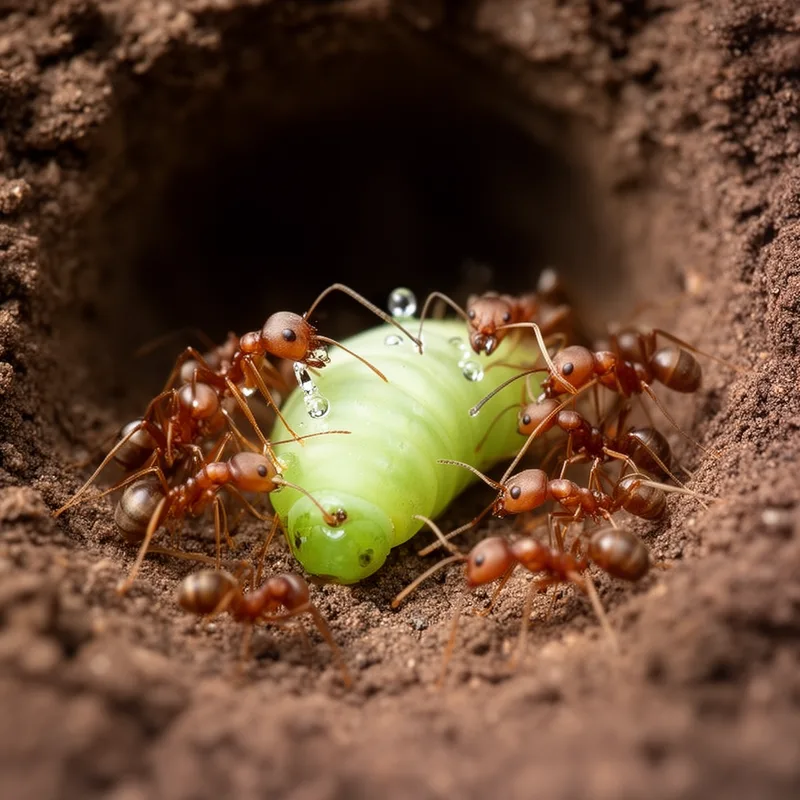
myrmecophilous
- adjective
- /ˌmɜr.mɪ.kəˈfɪl.əs/
- Specialized
- The myrmecophilous butterfly larvae secrete substances that attract and reward ants for tending them.
Examples
-
Some beetles are myrmecophilous, living inside ant nests and benefiting from the protection the colony provides.
-
Many plants have myrmecophilous relationships with local ant species.
-
A number of fungi have developed myrmecophilous traits to take advantage of ant colonies.
-
The myrmecophilous species thrives in the presence of ants.
-
Certain species of fungi exhibit myrmecophilous behavior, closely associating with ant colonies for mutual benefits.
-
Some beetles are myrmecophilous and can often be found living within ant nests, where they receive protection from predators.
-
The myrmecophilous larvae of some butterflies release substances that attract ants, which help care for them.
Surface Forms
Morphology
myrmecophilous = myrmecophile (opaque) = myrmeco + phil + ous
Formally derived from a noun 'myrmecophile' + suffix '-ous', but both elements are technical Greek combining forms unlikely to be recognized by an average B1 learner.
Etymology
Myrmecophilous comes from Greek parts that mean 'ant' and 'loving': myrmec- 'ant' and -philous 'loving' or 'friendly', similar to bibliophile 'book lover'. So a myrmecophilous organism lives with ants and usually gains help or protection from them.

