
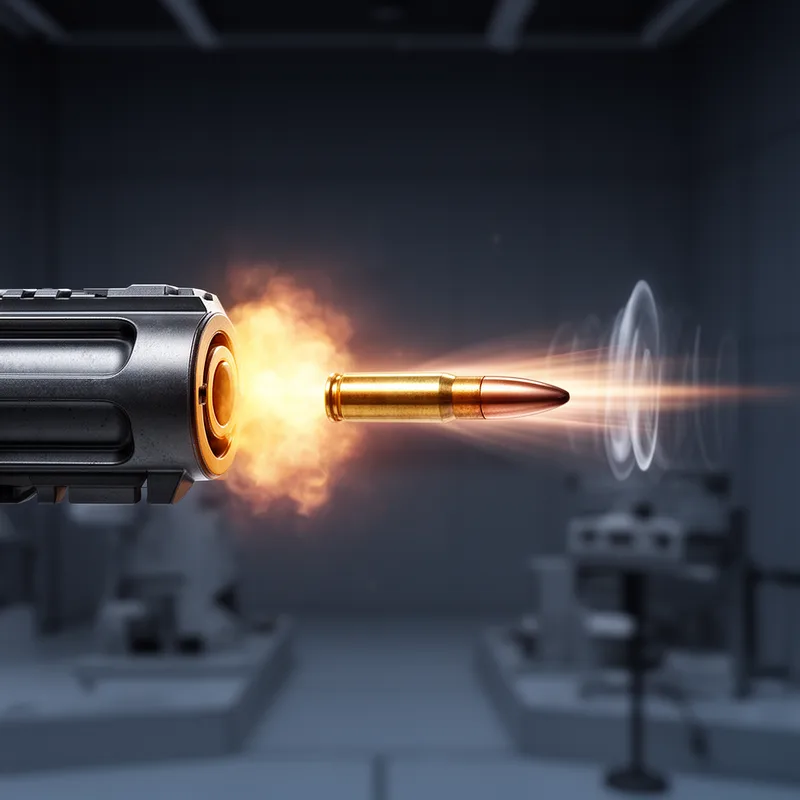
muzzle velocity
 3
7.0
3
7.0

- noun
- /ˈmʌzəl vəˈlɒsɪti/
- Specialized
- The Wikipedia-listed muzzle velocity is 2,799 ft/s, or 853 m/s.
- muzzle velocity: 2,890 feet
- muzzle velocity of 3,600 fps
- muzzle velocity: 1,700 meters
Examples
-
While a shorter barrel may lead to a drop in muzzle velocity in rifles such as the AR-15, the drop in velocity and accuracy may be small enough to be of little concern... at normal range.
Academic text (2016) -
The rounds have a muzzle velocity of 2,800 feet per second and an impact velocity of one and one-half foot-tons per square inch.
Fiction book (1997) -
And it has a muzzle velocity, an exit velocity.
-
We mostly talk muzzle velocities.
-
It doesn't have the highest muzzle velocity, but it makes up for it with the massive size of the round.
Blog text (34) -
It has a maximum range of 1,500 feet and a muzzle velocity of 2,800 feet per second.
Fiction book (1998) -
It fires a 5.56 mm ball projectile ... muzzle velocity 2,800 feet per second.
-
(87 SP) (150 Sp), when fired, has a muzzle velocity of 3700 ft/s, or 1128 m/s.
Blog text (34) -
The muzzle velocity of the bullet determines how far it can travel before losing speed.
-
For accurate shooting, knowing the muzzle velocity is essential for calculating trajectory.
How Fast
- Specialized

 1
7.5
1
7.5
 12
6.7
12
6.7
- Specialized
3
7.0
- Specialized
- Specialized
4
6.4
Surface Forms
Morphology
The meaning is directly derivable from combining 'muzzle' (the firearm's barrel exit) with 'velocity' (speed in a direction): it denotes the speed at that location. This is a straightforward compositional technical noun phrase following common measurement-of-location patterns (e.g. 'exit velocity'/'terminal velocity') and would be understandable to a B1 learner who knows both constituents.
Etymology
Muzzle velocity comes from the simple image of a gun's muzzle, like its 'mouth', and velocity, which means 'speed'. So it means the speed of a bullet as it leaves the gun.