
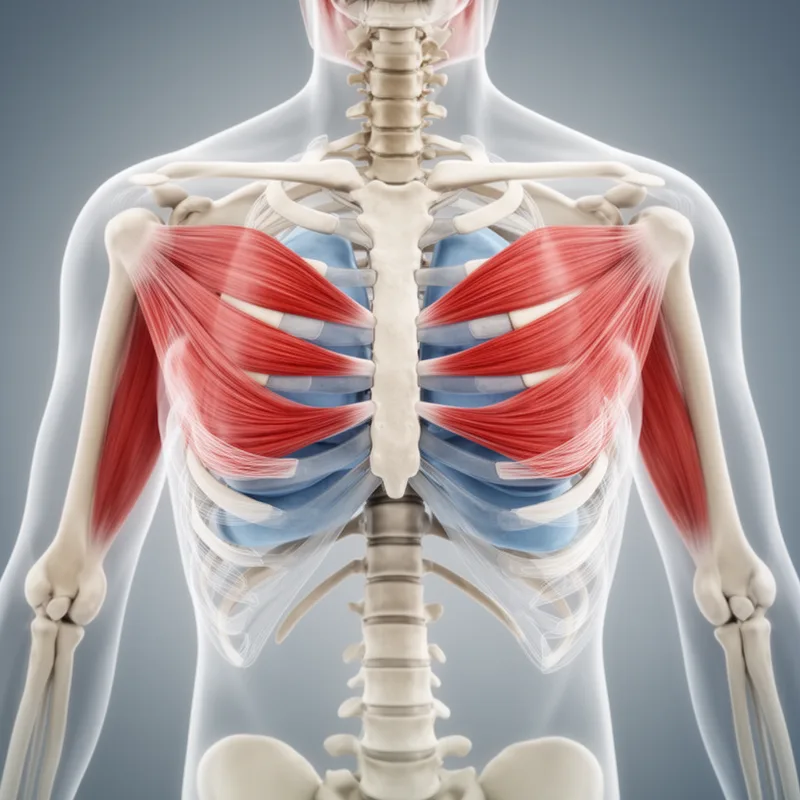
musculus serratus posterior
- noun
- /ˈmʌskjələs sɪˈreɪtəs pəˈstɪər/
- Specialized
- The musculus serratus posterior helps draw the rib cage backward during deep breathing.
Examples
-
The musculus serratus posterior plays an important role during forced exhalation.
-
The musculus serratus posterior plays a crucial role in respiratory mechanics.
-
In respiratory therapy, the musculus serratus posterior may be examined for signs of injury.
-
Weakness in the musculus serratus posterior can affect a patient's ability to expand the rib cage.
-
During the dissection, we observed the musculus serratus posterior clearly.
-
In yoga, engaging the musculus serratus posterior can enhance the effectiveness of certain poses.
-
Physical therapists often assess the musculus serratus posterior to improve a patient's breathing function.
Synonyms

A muscle in the upper back that helps move the ribs when you breathe
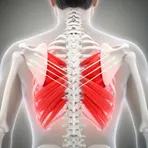
A part of the back that pulls the ribs down and back
Surface Forms
Morphology
musculus + serratus + posterior
The compound is built from identifiable anatomical elements — 'musculus' (muscle), 'serratus' (serrated/saw-toothed), and 'posterior' (rear) — so a learner who knows these parts can infer it is a serrated muscle located at the back. However, the Latinized technical form and the precise functional meaning (drawing the rib cage backward and downward) are specialized and not fully predictable from the parts for an average B1 learner, making comprehension partial.
Etymology
Musculus serratus posterior comes from old Latin words that give a clear picture: musculus meant 'little mouse' because muscles looked like mice under the skin, serratus meant 'saw-like' for its tooth-like edge, and posterior meant 'back'. So the name helps you imagine a saw-toothed muscle on the back that pulls the ribs down and back.

