
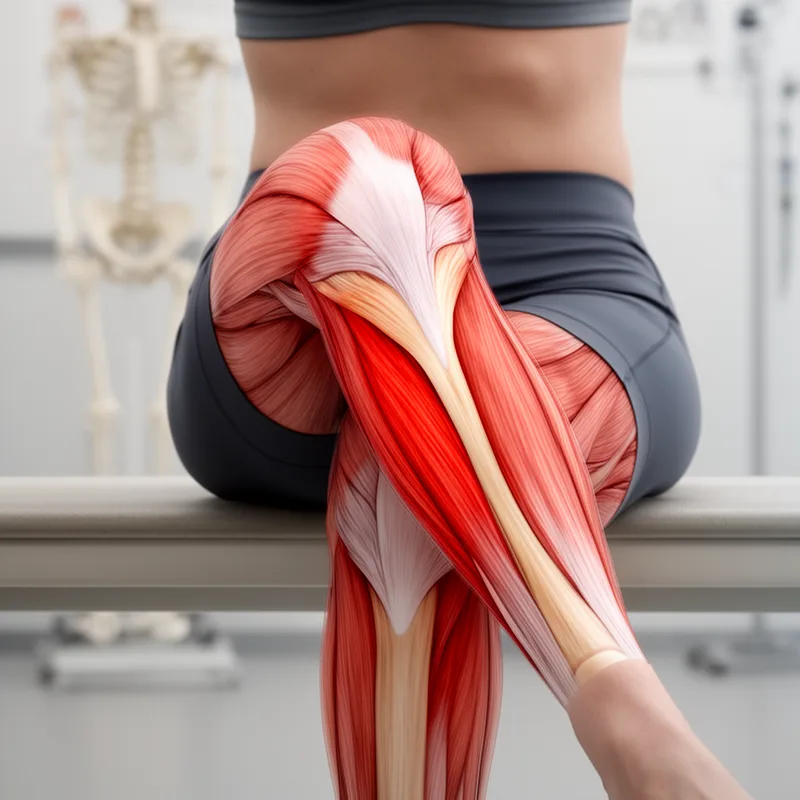
musculus sartorius
- noun
- /ˈmʌskjələs sɑːrˈtɔːriəs/
- Specialized
- The musculus sartorius plays a key role in allowing the leg to cross over the opposite knee.
Examples
-
During anatomy class, the musculus sartorius was identified as the longest skeletal muscle in the human body.
-
Damage to the musculus sartorius can affect the ability to sit comfortably cross-legged.
-
The musculus sartorius is crucial for cross-legged sitting.
-
Did you know the musculus sartorius is the longest muscle?
-
The musculus sartorius helps people comfortably sit cross-legged during meditation.
-
In a physical examination, the doctor checked the musculus sartorius to assess leg movement.
-
Stretching the musculus sartorius can improve your flexibility for yoga poses.
Synonyms


 1
7.2
1
7.2
A long thin thigh muscle that helps rotate the leg and cross one leg
Surface Forms
Morphology
This is a straightforward anatomical Latin naming: 'musculus' means muscle and 'sartorius' denotes the specific thigh muscle, so together they literally mean 'the sartorius muscle.' The compositional pattern (generic term + specific name) is standard in anatomy and cross-linguistically familiar, so a learner who knows both constituents would be able to derive the meaning.
Etymology
Musculus sartorius comes from old Latin and sartorius means 'tailor'. Tailors often sat cross-legged, and this very long muscle helps you cross your leg, so the name refers to that action.