

mucosa
 5
7.9
5
7.9

- noun
- /mjuˈkoʊsə/
- Specialized
- The nasal mucosa helps trap debris and pathogens to protect the respiratory system.
- nasal mucosa
- intestinal mucosa
- buccal mucosa
Loading YouTube…
Watch on YouTubeWe have to force it through this gauntlet of turbinates and mucosa and cilia and all of these different structures.
- We have to force it through this gauntlet of turbinates and mucosa and cilia and all of these different structures.
- But also, and I'm just taking a stab at this, probably the flora, the mucosa of two partners.
Examples
-
Inhibition of synthesis may therefore render the mucosa more susceptible to damage.
Academic text (1997) -
Bleeding of the oral mucosa.
-
The mass was covered with normal mucosa, with no obvious ulceration.
Academic text (2008) -
The striated border on the small intestinal mucosa surface was clearly defined.
Academic text (2015) -
Smoking any substance dries out the laryngeal mucosa and should be avoided.
Academic text (2008) -
The goal of surgery is to alleviate the patient's symptoms while preserving the mucosa and mucociliary function.
Academic text (2008) -
Clinical findings include ulceration of the nasal mucosa and destruction of the turbinates.
Academic text (1995) -
Subsequently, the bluish discoloration of the oral mucosa resolved, and healthy granulation tissue appeared.
Academic text (2008) -
The gingiva and buccal mucosa are affected most often, but palatal lesions are not uncommon.
Academic text (1996) -
After referral, an otorhinologic evaluation revealed an extremely dry, erythematous buccal mucosa and conjunctival erythema.
Academic text (1999)
Synonyms
 3
4.6
3
4.6
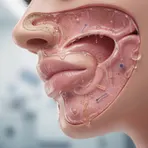
A moist inner layer lining body openings that makes sticky fluid to protect and keep them wet
Compounds

- Specialized
A small plant with moss-like leaves and tiny white four-petaled flowers that grows in rocky mountain places
How Deep

Surface Forms
Morphology
mucosa = mucus (semi-transparent) = mucos + a
The word clearly refers to tissue related to mucus, but its formation uses a Latin technical noun ending ('-a') that is not a productive English suffix, making it a specialized borrowing.
Etymology
Mucosa comes from the Latin mucus, meaning 'mucus', plus the ending -osa, meaning 'full of'. So a mucosa is the body lining 'full of mucus' that helps protect and keep places like the mouth, nose, and gut moist.