
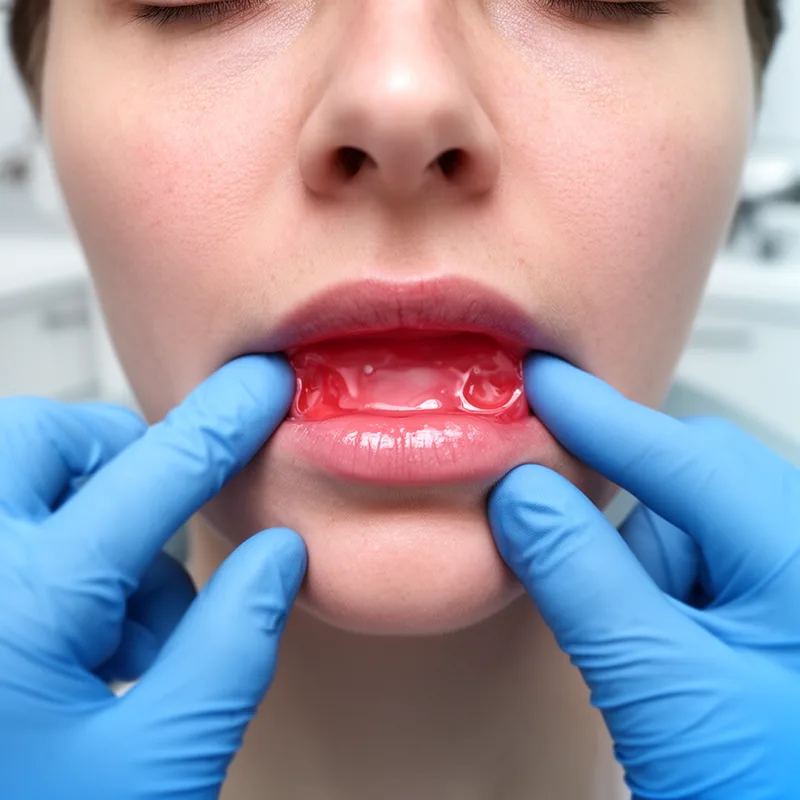
mucocutaneous
- adjective
- /ˌmjuːkoʊkjuˈteɪniəs/
- Specialized
- Mucocutaneous fungal infections are common and are usually mild.
- mucocutaneous infections
- mucocutaneous syndrome
Examples
-
Conditions affecting mucocutaneous areas often require special attention to both skin and mucous membranes.
-
Kawasaki also affects skin, lymph nodes, and mucous membranes, and this combination gives rise to the other diagnostic signs and to its other name of mucocutaneous syndrome.
Academic text (2012) -
Selected agents used to treat systemic infections are discussed first, followed by examples of agents used to treat mucocutaneous infections.
Academic text (2005) -
In the past, the prevalence of mucocutaneous mucormycosis in neonatal nurseries was higher than it is now.
Academic text (2008) -
Extending across the upper lip to the left nostril is an odd, irregular scar seven-eighths by one-eighths that ends at the mucocutaneous border.
-
Antifungal drugs include those used to treat systemic infection (in oral and parenteral form) and those used to treat mucocutaneous infections (in oral and topical formulations).
Academic text (2005) -
Minor bleeding episodes (WHO grade 1) included any mucocutaneous hemorrhages or hematomas not requiring red-cell transfusions, as well as retinal hemorrhages without impairment of vision.
Academic text (1992) -
Many patients with mucocutaneous disorders may experience discomfort in both their skin and oral areas.
-
Infections affecting both the skin and mucous membranes are referred to as mucocutaneous infections.
Compounds

- Specialized
An infection that causes sores on the skin and inside the nose or mouth
- Specialized
An illness in young children that causes fever, skin rash, and swollen glands
Surface Forms
Morphology
Etymology
The word mucocutaneous combines muc(o)- ('mucus') and cutaneous from cutis ('skin'), so it describes something that involves both the wet inner linings, like the inside of the mouth, and the outer skin.

