
mouthpart
 1
7.5
1
7.5

- noun
- /ˈmaʊθˌpɑrt/
- Specialized
 :
parte bucal
:
parte bucal
- Mouthparts were unfolded out of the head capsule and detached proximal to the labrum with sterile scissors.
- other mouthparts
Examples
-
A female decorated cricket below reaches for the spermatophylax with her mouthparts.
Academic text (1991) -
Ticks sitting on top of the membrane put their mouthparts through the membrane to feed on cattle blood that is stored underneath.
Academic text (1994) -
Care should be taken to remove the tick gently so as not to break the animal, leaving its mouthparts in situ.
Academic text (2014) -
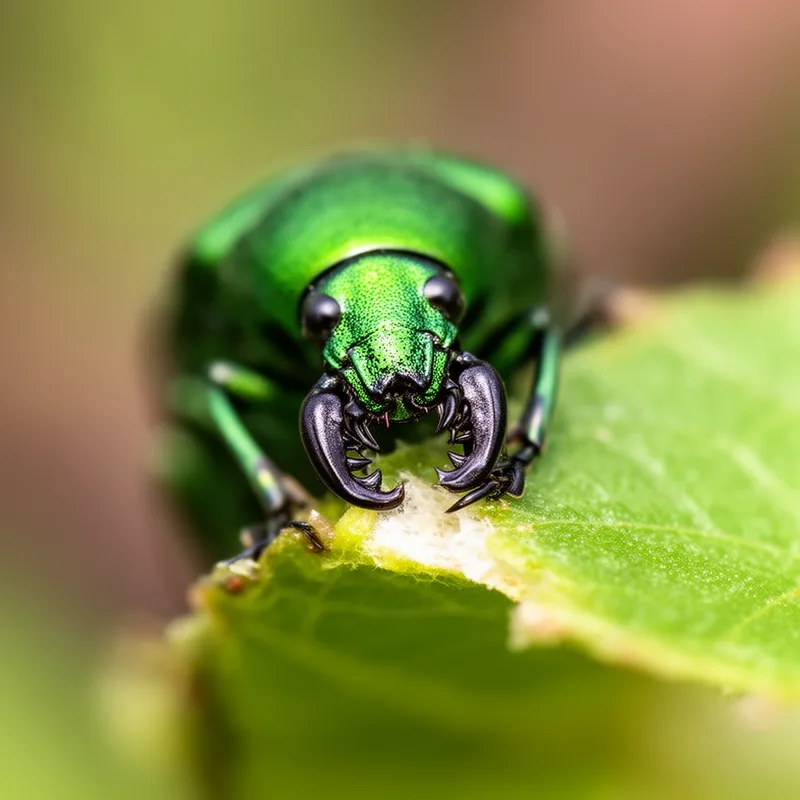
Beyond the cut, the beetle can feed without gumming up its feet and mouthparts.
Academic text (2002) -
The latter regurgitate the water a drop at a time and suspend it from their mouthparts.
Academic text (1990) -
Finally, the mosquito larvae, with their brushlike mouthparts, filter out the bacteria, protozoans, and leftover bits of the victim for their dinner.
Academic text (1992) -
The aphid transmits the citrus tristeza virus when it inserts its mouthparts into the veins of healthy leaves after feeding on virus-infected trees.
Academic text (1994) -
The butterfly uses its long, flexible mouthparts to sip nectar from flowers.
-
Insects like mosquitoes have specialized mouthparts designed for piercing skin and sucking blood.
-
The ant's mouthparts resemble tiny pincers, allowing it to grip food tightly.
Surface Forms
Morphology
Etymology
Mouthpart comes from the two simple words mouth ('the opening you eat and speak with') and part ('a piece'). So a mouthpart is literally a 'piece of the mouth', which is why we use it for the special mouth pieces insects and similar animals have for feeding.