
mouse-ear hawkweed
- noun
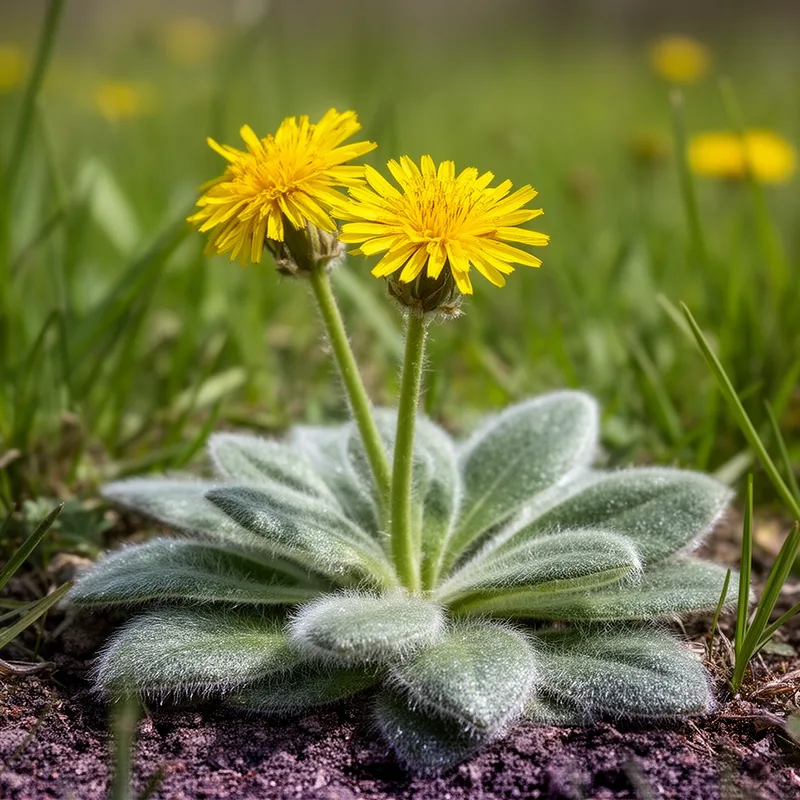
- She identified the fuzzy leaves as belonging to mouse-ear hawkweed during the nature walk.
Examples
-
Gardeners sometimes mistake mouse-ear hawkweed for a common dandelion due to its similar flower.
-
The field was dotted with the bright yellow flowers of mouse-ear hawkweed.
-
The mouse-ear hawkweed blooms in late spring.
-
I found some mouse-ear hawkweeds in the garden.
-
During our hike, we spotted several patches of mouse-ear hawkweed with their distinct yellow flowers.
-
The soft, hairy leaves of mouse-ear hawkweed are easily recognizable in the wild.
-
In the meadow, the vibrant blooms of mouse-ear hawkweed added a splash of color to the landscape.
Synonyms

A small European wild plant with soft, hairy leaves and yellow flowers
Surface Forms
Morphology
mouse-ear + hawkweed
The compound is a straightforward descriptive noun–noun construction: 'mouse-ear' describes a feature (ear-shaped like a mouse) and 'hawkweed' names the plant, so the phrase denotes a hawkweed with mouse‑ear‑like leaves. This compositional pattern is regular in English and cross-linguistically common, so a B1 learner who knows the constituent words can infer the intended botanical sense.
Etymology
The plant name mouse-ear hawkweed comes from its small, soft leaves that look like a mouse's ear and from the word hawkweed, the name for this group of yellow wildflowers. So the name tells you it is a hawkweed with low, fuzzy leaves and bright yellow flowers.

