

mountain clubmoss
- noun
- The mountain clubmoss is a fascinating plant that resembles a tiny evergreen tree.
Examples
-
The mountain clubmoss thrives in cold, rocky alpine regions where few other plants survive.
-
Hikers in Scandinavia often spot the distinctive mountain clubmoss on forest floors.
-
Botanists studied the mountain clubmoss for its unique adaptation to harsh northern climates.
-
The mountain clubmoss thrives in cool, moist environments.
-
Have you seen a mountain clubmoss before?
-
In the mountains, you can find the mountain clubmoss growing among the rocks and trees.
-
During our hike, we noticed the beautiful mountain clubmoss carpeting the forest floor.
Synonyms
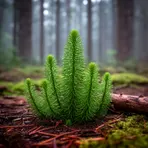
A small plant like a tiny fir tree that grows in damp northern European and North American forests
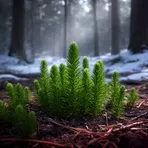
A small plant like a tiny fir tree that grows in cold northern forests

A small plant like a tiny fir tree that grows on the forest floor
Surface Forms
Morphology
mountain + clubmoss
This is a straightforward noun–noun compound where 'mountain' modifies 'clubmoss' to indicate a type or habitat (a clubmoss that grows in mountainous areas). The meaning is literal and compositionally derived from its parts, following common English modifier + head patterns, so a learner who knows both constituents can infer the meaning.
Etymology
The noun mountain clubmoss comes from the plant's look: it grows on mountains, its low green growth looks like 'moss', and it has a short top part that looks like a little club. So the name points to a 'small evergreen plant that grows on mountains'.

