
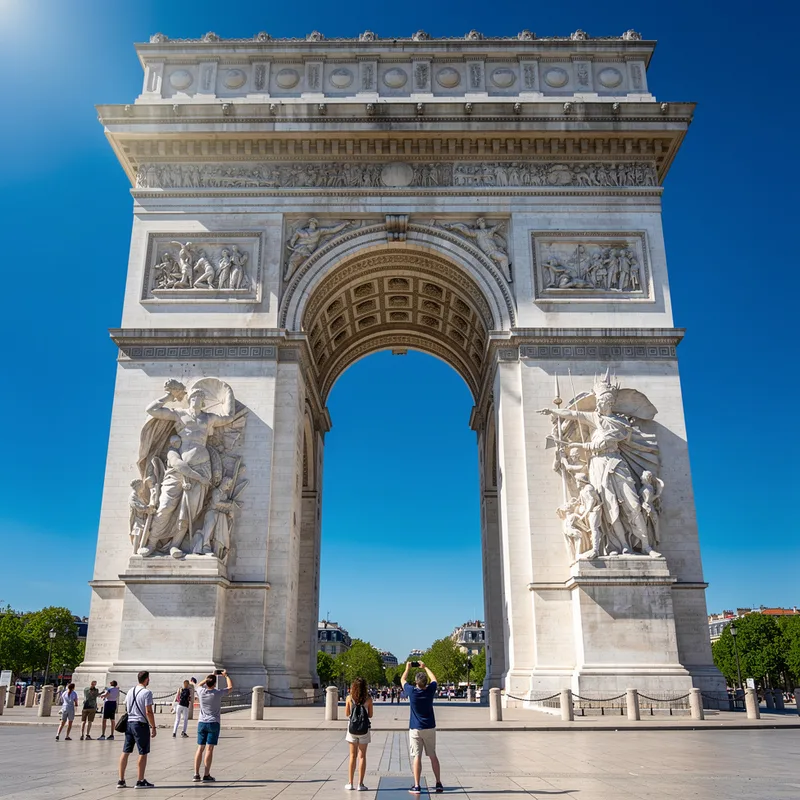
monument
 160
3.4
160
3.4

- noun
- /ˈmɒn.jʊ.mənt/
- When we passed a sign saying "Crazy Horse Monument," it seemed to confirm my feelings.
- national monument
- erect a monument
- memorials and monuments
Loading YouTube…
Watch on YouTubeIt has like these monuments of London all around it.
- It has like these monuments of London all around it.
- I don't want any other monument but that on my tombstone.
- So that gives us a timestamp for when the Giza Plateau monuments were planned, right?
- This image is out there today, but you will find no monument on the site.
- We put them on Mount Rushmore, we build monuments to them.
- I I'm afraid to look, but tell me it's picture the Washington Monument.
- How can we create monuments that they could then analyze?
Examples
-
The site contains one of the most impressive prehistoric stone monuments found in Africa.
Academic text (2011) -
When you think of national or internationally recognized monuments, several will come to mind.
Academic text (2008) -
A monument to Roman law and order.
-
And he puts up a major monument in the Roman Forum.
-
Travel to any capital city, and you will have monuments pointed out to you.
Academic text (2008) -
I climb the steps of the Scot monument every morning.
-
The main road continues to Roman ruins and other monuments at the end of the valley.
Academic text (2008) -
The Hallwell Monument stood outside the walls of the old Fort.
-
Edinburgh cityscape is studded with monuments to memories.
-
The cornerstone of the monument was laid on Independence Day, 1848.
Synonyms
 197
3.7
197
3.7
A structure like a statue that reminds people of an important person or event
 4
9.9
4
9.9
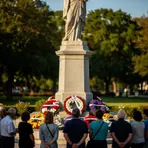
A memorial that honors people or events
Compounds

 6
3.3
6
3.3
A place or building that a national government protects because it is important in history and people can visit
How Important
6
3.3
 160
3.4
197
3.7
381
1.0
64
5.1
71
2.0
160
3.4
197
3.7
381
1.0
64
5.1
71
2.0
Surface Forms
Etymology
Monument comes from an old Latin word monere, which means 'to remind' or 'to warn', so a monument is something built to 'remind' people of a person, event, or history. You can see the same root in the word monitor ('to watch' or 'to remind'), which helps explain why monuments act like memory in stone.