
monolatry
- noun
- /ˈmɒnəˌlɑːtri/
- Specialized
- What is monolatry?
Examples
-
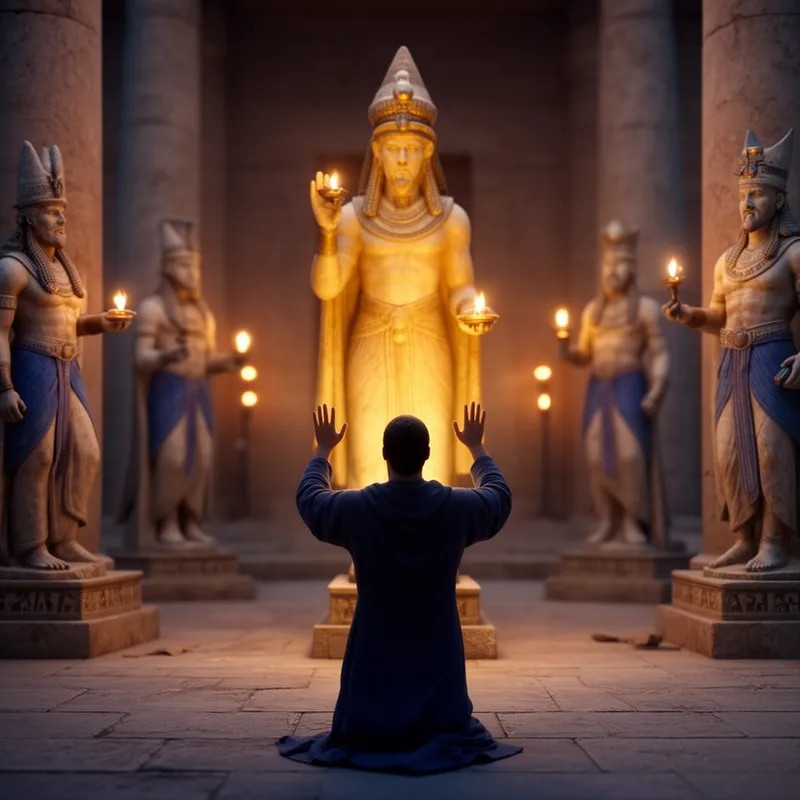
Some ancient societies practiced monolatry rather than monotheism, worshipping one god without denying the existence of others.
-
The concept of monolatry helps explain the religious diversity found in the ancient Near East.
-
Biblical scholars debate whether early Israelites practiced monolatry before moving toward strict monotheism.
-
The concept of monolatry is often misunderstood.
-
In ancient cultures, many practiced monolatry, focusing on a primary deity among many.
-
The concept of monolatry can be seen in certain religious traditions that emphasize devotion to one god.
-
People who follow monolatry may recognize the existence of other gods but choose to worship only one.
Synonyms

Belief in and worship of one god while accepting that other gods are real
How Exclusive


Surface Forms
Morphology
monolatry = latry (opaque) = mono + latry
The prefix mono- clearly means 'one', but the base element -latry is a learned bound form meaning 'worship' rather than a productive modern English word, so the word is not easily guessable for most learners.
Etymology
Monolatry comes from mono- 'one' and -latry 'worship', the same ending as in idolatry, so it means worshipping one god without denying the existence of other gods.