

monochromasy
- noun
- /ˌmɒnəˈkroʊməsi/
- Specialized
- Because of his monochromasy, he couldn't tell the difference between red and green apples except by their brightness.
Examples
-
People with monochromasy experience the world in shades of gray rather than in color.
-
Researchers developed special lenses to help those with monochromasy navigate daily life.
-
She was diagnosed with monochromasy at a young age.
-
People with monochromasy struggle to differentiate colors.
-
Because of his monochromasy, he couldn't tell the difference between red and green apples except by their brightness.
-
People with monochromasy experience the world in shades of gray rather than in color.
-
People with monochromasy struggle to differentiate colors in their environment.
Synonyms

A condition in which a person sees only shades of gray

A condition in which a person sees the world only in shades of gray

A condition in which someone sees only shades of gray and not colors

A condition in which a person can only see shades of light and dark

A condition in which a person cannot see colors and only sees shades of gray
Antonyms


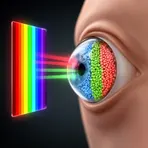
- Specialized
Seeing many colors normally because the eyes have three kinds of color cells
How Colorful

Surface Forms
Morphology
monochromasy = monochrome (semi-transparent) = mono + chrom + asy
The base 'monochrome' is recognisable, but the suffix creates a specialised medical noun for a type of colour blindness whose exact meaning is not directly predictable.
Etymology
Monochromasy comes from mono- 'one' and chroma 'color', so it literally means 'one color'. Think of monochrome, as in black-and-white pictures, — someone with monochromasy sees only shades of gray and can tell things only by how light or dark they are, not by different colors.