
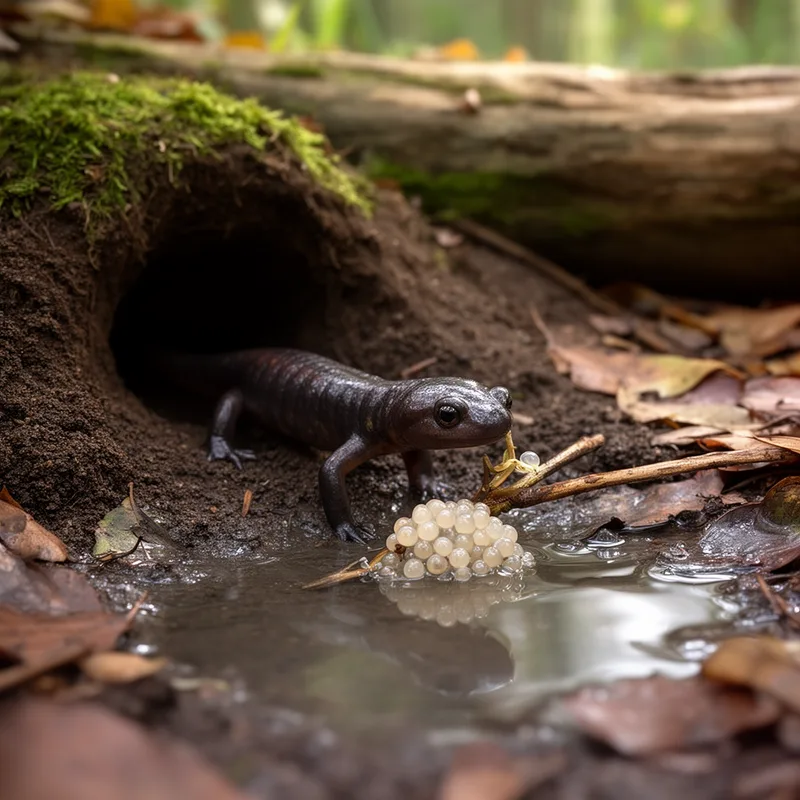
mole salamander
- noun
- /moʊl ˈsæləmændər/
- US
- The mole salamander is rarely seen above ground, as it spends most of its life burrowing in the soft soil.
Examples
-
In the spring, the mole salamander emerges from underground to breed in temporary ponds.
-
Researchers observed the mole salamander foraging for insects near its burrow in the forest.
-
They concluded that CWD may be important for mole salamanders only immediately after harvesting, when there is little litter or ground cover.
Academic text (2009) -
The largest effect size we measured in a single treatment was for water loss in the South Carolina clearcut treatment for mole salamanders (Rothermel and Luhring 2005).
Academic text (2009) -
Moseley and colleagues (2004) found that mole salamanders increased their use of CWD only when there was very little pine litter on the ground, and that salamanders in litter removal treatments had higher activity levels.
Academic text (2009)
Synonyms
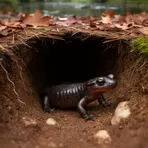
A small brownish-black salamander that lives underground in the southeastern United States
How Burrowing


Surface Forms
Morphology
The compound is fully compositional: 'mole' (a burrowing animal) modifies 'salamander', so the phrase denotes a salamander with mole-like, burrowing habits or appearance. This follows a productive noun–noun compounding pattern found across languages, so a B1 learner who knows both constituents can reasonably infer the meaning.
Etymology
Mole salamander gets its name from the animal's habit of living like a mole. Because this brownish salamander digs and spends much of its life 'underground' or under leaves, the name helps you remember it is a salamander that 'burrows'.