
mita
- noun
- /ˈmiːtə/
- Specialized
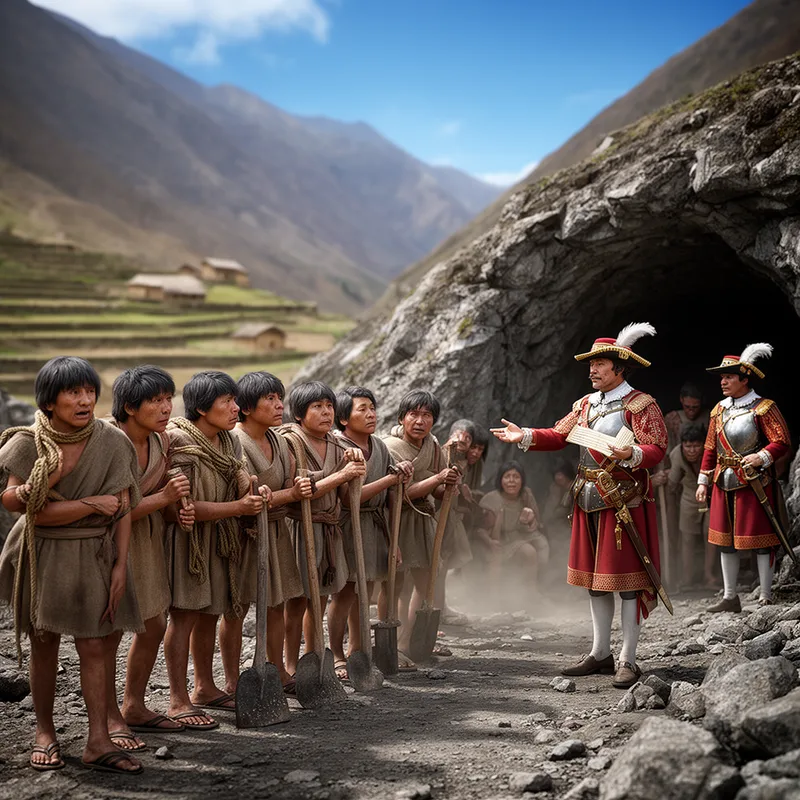
- The indigenous people were forced into the mita, working long hours in the mines without pay.
- mita and tribute
- mita minera
- mita ordinaria
Examples
-
While the introduction of new commodities and forms of exchange, and the colonial systems of tribute and mita or forced labor, have been well documented and analyzed, investigations into the lived experience of work have been less abundant.
Academic text (2000) -
A shrunken Indian population, weakened by sickness and malnutrition, continued to face demands from corregidores and other local authorities for tribute and mita based on rolls that, although still legally current, listed many Indians who had died during the epidemic.
Academic text (2001) -
Such an increase in registered population had clear implications for Indian tribute and the mita.
Academic text (2001) -
As mestizos, they similarly became exempt from service in the mita.
Academic text (2001) -
With regard to the mita, the evidence as to the incorporation of forasteros is conflicting.
Academic text (2001) -
Reregistration also preserved and at Potosi actually increased the size of the effective mita minera.
Academic text (2001) -
At Huancavelica, the mita had officially remained unchanged since 1645, at 620 mitayos.
Academic text (2001) -
Castelfuerte issued decrees ordering that the forasteros of particular provinces serve the mita alongside the originarios.
Academic text (2001) -
Any mestizo thus reregistered as an Indian would immediately become liable for both tribute and the mita, giving the measure the potential to provoke considerable unrest among the population.
Academic text (2001) -
We have seen that Castelfuerte envisaged that forasteros reclassified in this way should be obliged to serve the mita and pay tribute in exactly the same fashion as originarios.
Academic text (2001)
Surface Forms
Etymology
The word mita comes from the Quechua word mit'a, which means 'turn' or 'task'. In Inca times communities gave a 'turn' of work for public projects, and the Spanish kept the idea to send people as labor for mines and roads, so mita now refers to that system of forced or rotational work.

