
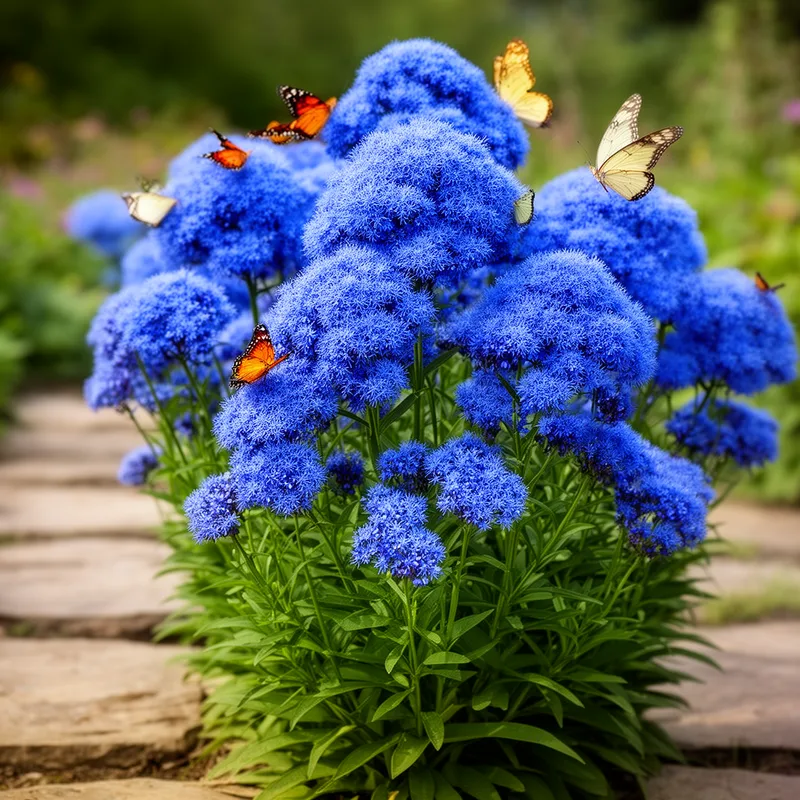
mist-flower
- noun
- Specialized
- The garden was dotted with beautiful mist-flower blooms that attracted butterflies.
Examples
-
In late summer, the vibrant blue clusters of the mist-flower brightened the meadow.
-
She planted a row of mist-flower along the edge of her walkway for a splash of blue.
-
The mist-flower blooms beautifully in the summer.
-
I saw a mist-flower while hiking in the woods.
-
In late summer, the vibrant blue clusters of the mist-flower brightened the meadow.
-
She planted a row of mist-flower along the edge of her walkway for a splash of blue.
-
The garden was dotted with beautiful mist-flower blooms that attracted butterflies.
Synonyms

A plant that spreads through underground roots and has bright blue flowers in late summer

A plant that lives for many years with large bright blue flower heads that attract butterflies

A flowering plant with clusters of bright blue flowers that attract bees and butterflies
Surface Forms
Morphology
Etymology
The word mist-flower comes from the English parts mist and flower. The plant's many small pale-blue blooms form large clusters that look like a soft 'mist' or 'cloud', so the name describes this showy blue-flowered plant.

