

mise en scene
- noun
- /miːz ɑːn ˈsɛn/
- Specialized
- The director carefully planned the mise en scene to evoke a sense of nostalgia in the film.
Examples
-
In the play, the mise en scene included ornate props that enhanced the historical setting.
-
- Crazy probably didn't want it distracting from his mise en scene.
-
The team's focus on the mise en scene transformed the simple script into a visually stunning production.
Synonyms
 416
6.0
416
6.0

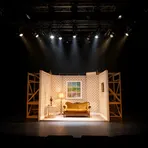
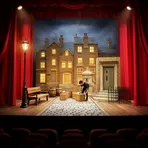
The scenery and objects used on a stage or film
 19
3.0
19
3.0
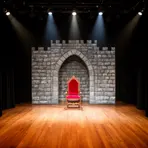
The scenery and props arranged to show a place in a play or film
 10
4.3
10
4.3
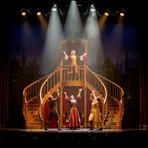
Presenting a play with choices about sets, lights, and actors
 3
3.6
3
3.6
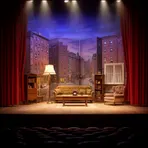
The background and objects on a stage that show where and when a play happens

 1
3.6
1
3.6
The arrangement of background and objects on a stage to show where the story happens
Antonyms

How Elaborate

Surface Forms
Morphology
mise + en + scene
The phrase is a French borrowing (mise en scène) whose literal parts correspond to 'placement/in' + 'scene', so if a learner actually knew the meanings of 'mise' (placement) and 'en' (in) the overall sense 'the arranging/placement of a scene' is derivable. However, the key constituents are not English words and the term is specialized film/theatre jargon, so it will not be immediately predictable or familiar to a typical B1 learner who only knows English vocabulary.
Etymology
Mise en scene comes from French and literally means 'putting on stage', with mise like 'putting' and scene like 'stage'. It paints the image of arranging actors, props and scenery to create a mood, so today it means 'the look and feel of a scene'.