
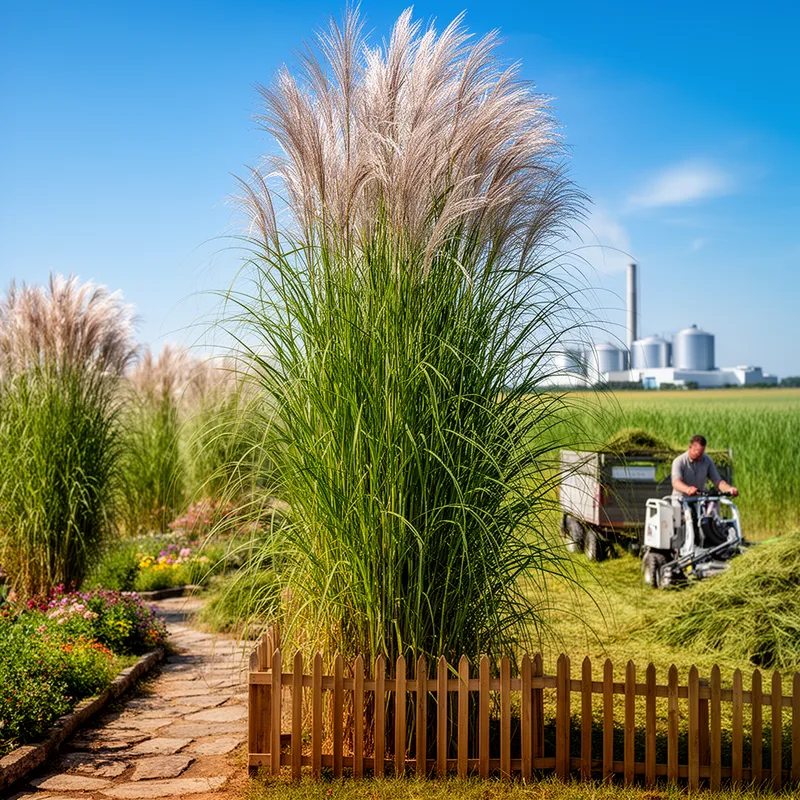
miscanthus
 1
9.3

- noun
- Specialized
- We looked at poplar, Miscanthus, switchgrass, prairie grass, and stover," University of Illinois agricultural economist Madhu Khanna said in a statement.
- miscanthus sinensis
Loading YouTube…
Watch on YouTubeYou can see some agastaki, some geranium, I think Spiraea, Yarrow, and that grass in the very back, that's a miscanthus.
- You can see some agastaki, some geranium, I think Spiraea, Yarrow, and that grass in the very back, that's a miscanthus.
Examples
-
Miscanthus doesn't seem to require very high-quality crop land to begin with, although that is still being studied through field experiments.
Blog text (6) -
Miscanthus is a genus of rhizomatous perennial C4 grasses native to the tropics and subtropics.
Academic text (2008) -
Meanwhile, we can plant acreage in Miscanthus, which takes several years to come to harvest maturity.
Blog text (33) -
The WRA results for miscanthus in the United States yielded an "accept" rating.
Academic text (2008) -
The relatively minor risk of invasion from miscanthus is attributed primarily to the lack of seed production (Lewandowski et al. 2000).
Academic text (2008) -
The temples are cypress-wood huts raised on stilts and topped with miscanthus thatch, set in compounds floored with white pebbles.
Academic text (2018) -
Planting miscanthus in your garden can provide a beautiful decorative element while also helping the environment.
-
Farmers are increasingly planting miscanthus as a sustainable source of bioenergy due to its rapid growth.
-
The elegant plumes of miscanthus sway gently in the breeze, adding texture to the garden throughout the seasons.
How Tall

Surface Forms
Etymology
Miscanthus comes from Greek parts miskos meaning 'stalk' and -anthus meaning 'flower'. So the name pictures the plant's tall flowering stalks and helps you remember it is a tall grass often grown for decoration or bioenergy.