
mirex
- noun
- /ˈmaɪrɛks/
- Archaic
- The higher level of mirex in the St. Lawrence estuary animals (Fig. 3) is not surprising, since the St. Lawrence River drains an area having industrial sources for this compound.
Examples
-
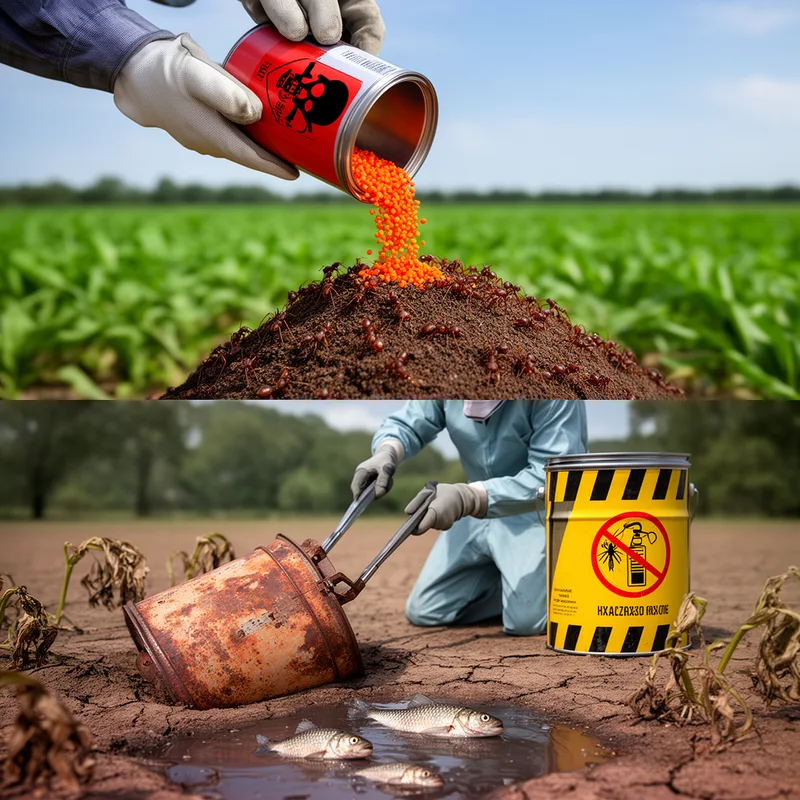
The expert explained that mirex is a toxic insecticide that was once commonly used to control fire ants.
-
The beluga whales from the St. Lawrence estuary had the highest concentrations of these compounds, with both SPCB's and SDDT being an order of magnitude greater than the other animals, and mirex being, on average, more than twice as great as levels reported for belugas from other locations.
Academic text (2000) -
Data for dieldrin, hexachlorobenzene (HCB), hexachlorocyclohexane (the sum of a-, -, and ?-HCH), and mirex are presented in Table 3.
Academic text (2000) -
The program results would also confirm if the large-scale static window composting process is capable of reducing the loading of persistent toxic substances such as PCBs, DDT, DDE, and mirex by biodegradation.
Academic text (1997) -
Due to its harmful effects, mirex was banned from use in agriculture.
-
Research shows that mirex can accumulate in the environment, posing risks to wildlife.
Surface Forms
Etymology
Mirex is a made-up chemical name, but a helpful way to remember it is to think of mire ('mud') with an 'x' to make it sound like a lab chemical. That picture fits the real insecticide: it stuck around in soil like mud and was toxic, which is why it was later banned.

