

mineral tar
- noun
- /ˈmɪnərəl tɑr/
- Specialized
- During the industrial era, mineral tar was widely used for waterproofing roofs.
Examples
-
The pipe was coated with mineral tar to prevent corrosion.
-
If mineral tar is overheated, it can release harmful fumes.
-
The road was coated with mineral tar to improve durability.
-
Many construction projects use mineral tar for waterproofing.
-
Many construction projects use mineral tar for waterproofing because of its durability.
-
If mineral tar is overheated, it can release harmful fumes that are dangerous to breathe.
-
The pipe was coated with mineral tar to prevent corrosion and ensure a long-lasting seal.
Synonyms

 65
4.1
65
4.1

A thick dark sticky substance used to make roads and roofs waterproof
 3
7.4
3
7.4
A thick black sticky substance used to make roads and roofs waterproof

A thick black sticky substance from the ground that seals and makes things waterproof
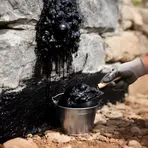
A thick dark sticky substance like tar that comes from oil or from the ground and is used for waterproofing
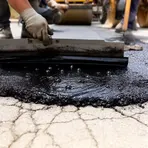
A dark tar-like material used to make roads and keep surfaces dry
Surface Forms
Morphology
The phrase 'mineral tar' is compositionally built: 'mineral' modifies 'tar' to indicate tar derived from minerals, and a learner who knows 'mineral' (inorganic substance) and 'tar' (viscous residue) can infer this meaning. Although somewhat technical, the modifier+noun pattern is transparent and cross-linguistically common, so a B1 learner who knows both constituents would understand the MWE.
Etymology
Mineral tar comes from the thick black tar made by heating minerals or underground oil; people used this sticky, glue-like material to 'seal' roofs and pipes and keep water out. That's why mineral tar means a thick, black, sticky substance used to 'protect' and 'waterproof' surfaces.