
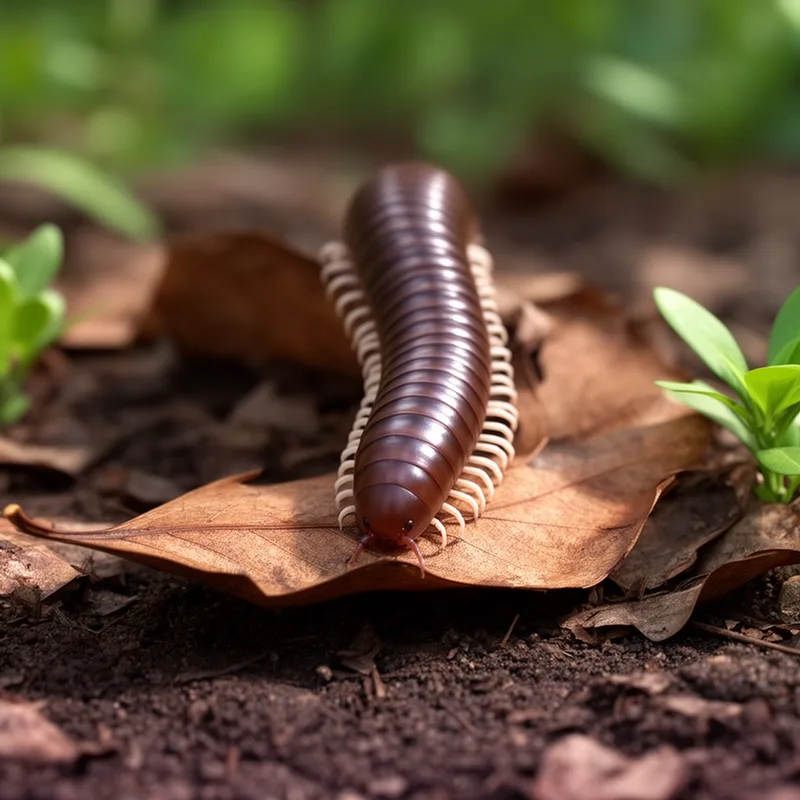
millipede
 5
4.9
5
4.9

- noun
- /ˈmɪlɪˌpid/
- Some millipedes have eyes, some don't.
Loading YouTube…
Watch on YouTubeIt looks like a whole pile of millipede legs moving.
- It looks like a whole pile of millipede legs moving.
- And they have like a petting zoo part of it where like they have like millipedes, centipedes.
- Keith vlogs day check out this gnarly centipede millipede Look at him.
Examples
-
The garden was teeming with life, including a millipede that scurried across the damp soil.
-
During our nature walk, we observed a millipede slowly crawling over a patch of moss.
-
It's the biggest millipede species in the world.
-
A harmless old millipede, she thought, and I nearly jumped out of my skin.
Fiction book (2000) -
Granted, it's an enormous harmless millipede, but still....
Fiction book (2000) -
There are around 10,000 species of millipedes, but the one with the most legs of all is Illacme plenipes.
Blog text (29) -
The purple pitcher plant is a deathtrap for insects, millipedes, spiders, and even small frogs.
Academic text (1992) -
From crustaceans to millipedes, spiders to insects, the arthropods outnumber all animals on land.
-
In the rainforest exhibit, visitors can walk through a model forest canopy and view its native inhabitants: scorpions, millipedes, and walking sticks, among others.
Academic text (1993) -
As he explored the forest floor, he spotted a vibrant millipede wriggling among the fallen leaves.
Synonyms

A small animal with a long round body and many legs that moves slowly
An animal with many body segments and many legs like a millipede
Surface Forms
Morphology
millipede = milli + pede
The word is formed from Latin combining elements (milli- + -pede) that are not standalone English words, so an average B1 learner cannot reliably derive 'many-legged arthropod' from the components.
Etymology
Millipede comes from two parts: milli- meaning 'thousand' and -pede meaning 'foot', and you see the same idea in centipede, which means 'hundred feet', and in pedal, which means 'foot'. So a millipede is an animal with very many feet — almost a 'thousand' — which explains its long, many-segmented body.