
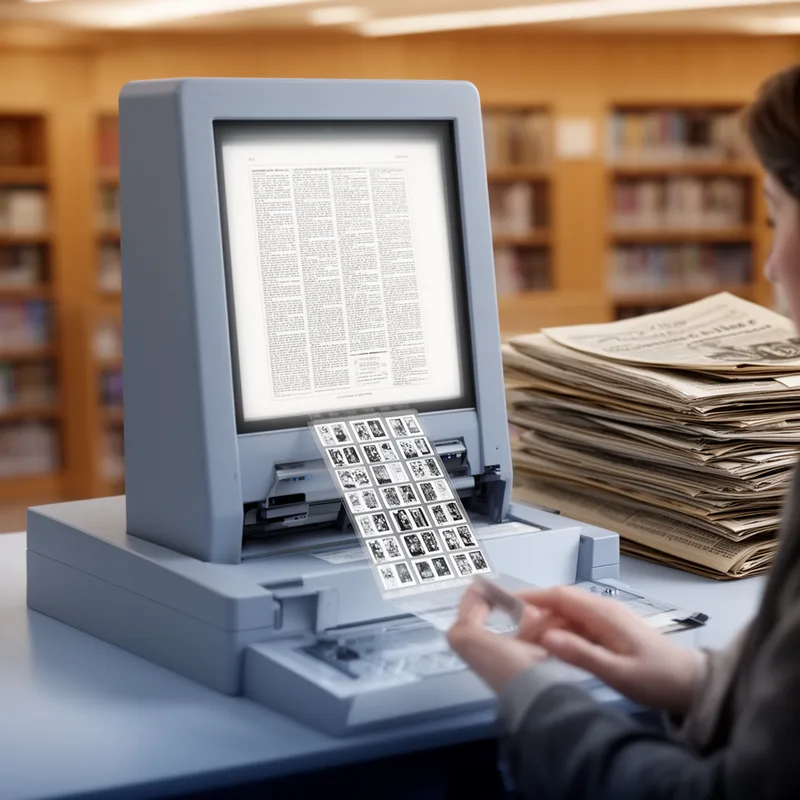
microform


 1
8.2
1
8.2
- noun
- /ˈmaɪkroʊfɔrm/
- Archaic
- From paper through microform to CD-ROM and now the Internet, these documents form an unparalleled look at our history from both macro and micro perspectives.
- microform at British Library
- microform. Early American Newspapers
Examples
-
Many universities archive important texts in microform to save physical space and preserve their contents.
-
Like many other information sources, microforms have been converted to a digital format in recent years.
Academic text (2015) -
By the mid-1960s, a microform reader could be found in most libraries.
Academic text (2015) -
He took the elevator to microforms and found the boxed reels of the Chicago Tribune.
Fiction book (1991) -
A glassed-in area that housed the periodicals reading room, the periodicals service desk, microform machines, and storage cabinets for library microforms was on one side of this space.
Academic text (2014) -
There is no better illustration of the library profession's emphasis on "information" over artifacts than the way it has succumbed to the lure of microfilm and other microforms.
Academic text (1992) -
The library has a dedicated section for microform materials, where users can view old newspapers and documents.
-
To access historical documents, you may need to use a microform reader available in the reference area.
How Compact

Surface Forms
Morphology
Etymology
Microform comes from micro- meaning 'small' (as in microscope) and form meaning 'shape'. So microform literally means a 'small form', which helps you remember it is a tiny photographic copy of a page or document used to save space and protect the original.