
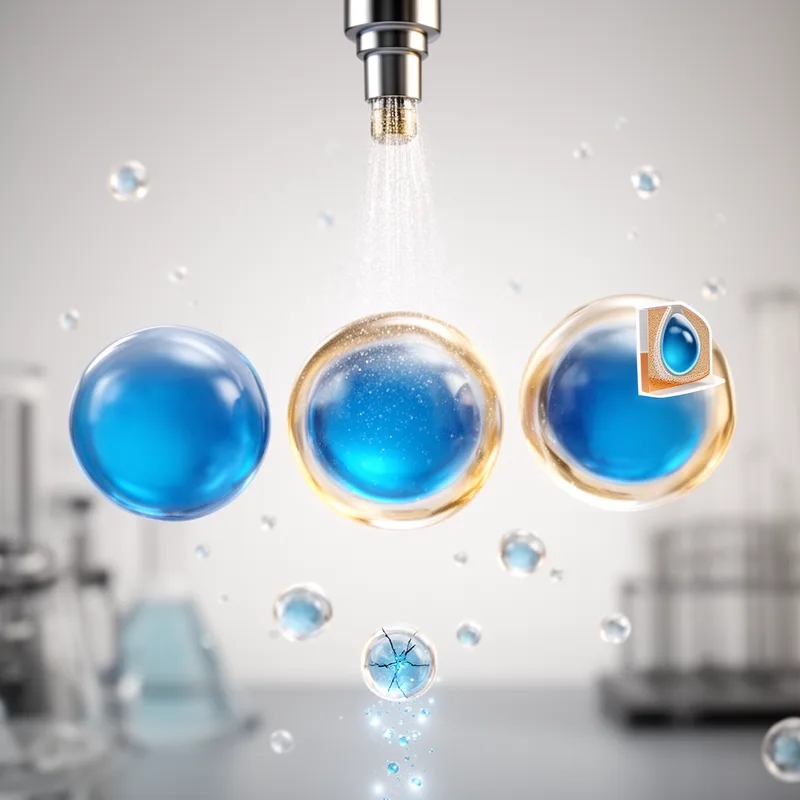
microencapsulation


 1
8.9
- noun
- /ˌmaɪkroʊˌɛnkæpˈsʌleɪʃən/
- Specialized
- Advances in microencapsulation have improved the delivery of certain medications.
Examples
-
The company uses microencapsulation to protect sensitive ingredients in its food products.
-
The process of microencapsulation is widely used in pharmaceuticals.
-
Researchers are exploring microencapsulation to control the release of fertilizers in agriculture.
-
Researchers are studying microencapsulation techniques for food preservation.
-
The pharmaceutical industry often uses microencapsulation to protect sensitive ingredients in drug formulations.
-
Researchers are investigating how microencapsulation can improve the stability of probiotics in food products.
-
In cosmetics, microencapsulation helps to deliver active ingredients gradually for better skin absorption.
Synonyms
 2
6.8
Putting something inside a small container to protect or hold it
How Small
- Specialized
1
8.9
 2
6.8
Surface Forms
Morphology
microencapsulation = encapsulation (transparent) = micro + en + capsul + ation
The word is formed by adding micro- to the already compositional noun encapsulation, so the small-scale enclosing meaning is straightforward.
Etymology
The word microencapsulation breaks into micro- meaning 'small' and capsule meaning 'a small container', just like in microphone and a medicine capsule. So, microencapsulation is the process of putting very small particles or drops into tiny capsules to protect them or control when they are released.