
microcirculatory


 1
7.7
- adjective
- /ˌmaɪkroʊˈsɜrkjʊˌleɪtəri/
- Specialized
- Improving microcirculatory health is essential for enhancing overall cardiovascular function.
- microcirculatory model
Examples
-
Excessive coagulation activation in the microcirculatory bed plays a significant part in the pathophysiology of severe sepsis.
Academic text (2005) -
With prolonged periods of microcirculatory ischemia, necrosis of the intracompartmental tissues, including muscle and nerve tissue, results.
Academic text (2004) -
Thus, this makes the cremaster flap a unique model for microcirculatory monitoring.
Academic text (2015) -
The TcPO2 assesses microcirculatory status indirectly by measuring transcutaneous oxygen tension.
Academic text (1990) -
After the microcirculatory observations had been completed, the rats were euthanized with a 2 mL intravenous injection of Beuthanasia-D (Intervet/Schering-Plough, USA).
Academic text (2015) -
In addition, skin microcirculation models such as the ear chamber model allow for microcirculatory evaluation only within the chamber lumen and do not represent the axial pattern of vessels, which is pertinent to models mimicking reconstructive surgery.
Academic text (2015) -
The doctor explained that microcirculatory issues can lead to complications in patients with diabetes.
-
Researchers are studying microcirculatory flow to understand how blood moves through tiny vessels in the skin.
Synonyms
 1
5.6
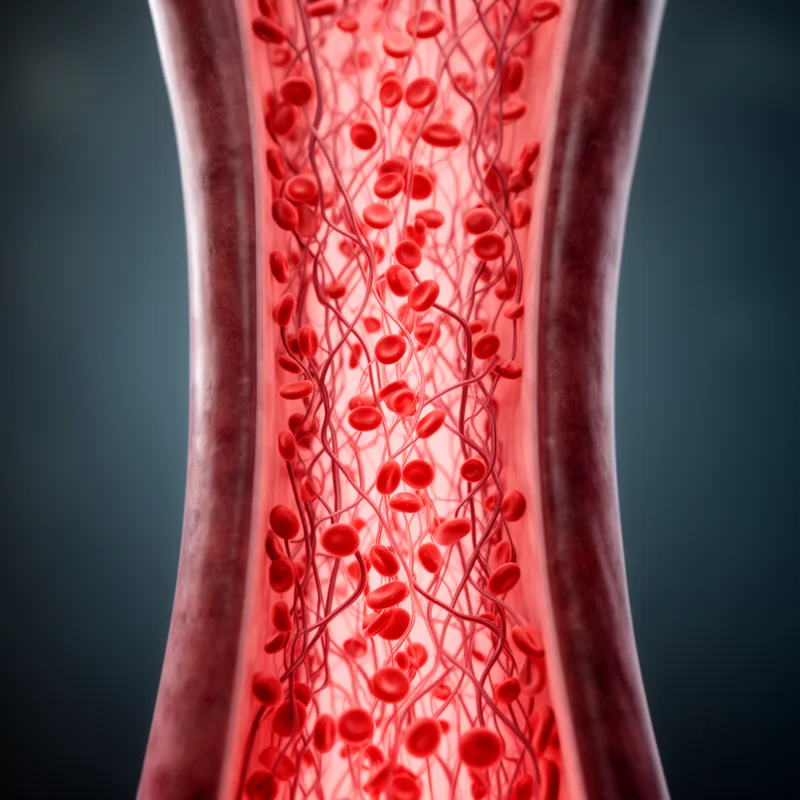
Relating to tiny blood vessels in the body
Surface Forms
Morphology
microcirculatory = circulatory (semi-transparent) = micro + circul + atory
The word is clearly built from micro- plus circulatory, but it is a technical medical term rather than a fully everyday formation.
Etymology
Microcirculatory joins micro- 'small' and circulatory, which comes from the idea of a circle or circulate meaning 'to move around'. So it refers to the 'small' movement of blood in the body's tiniest vessels, like capillaries, that carry blood through tissues.