

metrical foot
- noun
- /ˈmɛtrɪkəl fʊt/
- Literature
- In the poem, each metrical foot creates a distinct rhythm that enhances the overall musicality.
Examples
-
Each illustrates what an English verse line of six metrical feet can do when it obeys a metrical law that is properly "natural" and "poetic" in Swinburne's terms.
Academic text (2016) -
Lines written outside of the main body of the poem, some even written next to other lines, and lines with different numbers of metrical feet all demonstrate her ability to protest against the patriarchal, accepted way of doing things. - Denise D. Sutterfield
Fiction book (1996) -
The poet carefully varied the number of metrical feet in each line to emphasize different emotions.
-
Understanding the structure of a metrical foot is essential for analyzing classical poetry.
Synonyms

 15
8.2
15
8.2

A group of two or three syllables that makes the rhythm in poetry
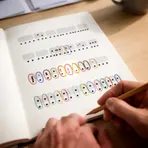
A group of two or three syllables that makes the basic rhythm in a poem
Surface Forms
Morphology
The meaning is directly built from 'metrical' (relating to poetic meter) and 'foot' (a unit of syllables), so a learner who knows both words can infer that a 'metrical foot' is a rhythmic unit in poetry. This is a compositional, technical term following normal adjectival modification and is therefore predictable to B1 learners familiar with the constituents.
Etymology
Metrical foot comes from a simple image: think of reading a poem like taking steps, and each foot is one step made of a small pattern of strong and weak syllables. That's why metrical foot means a small group of two or three syllables that gives the poem its 'rhythm'.