
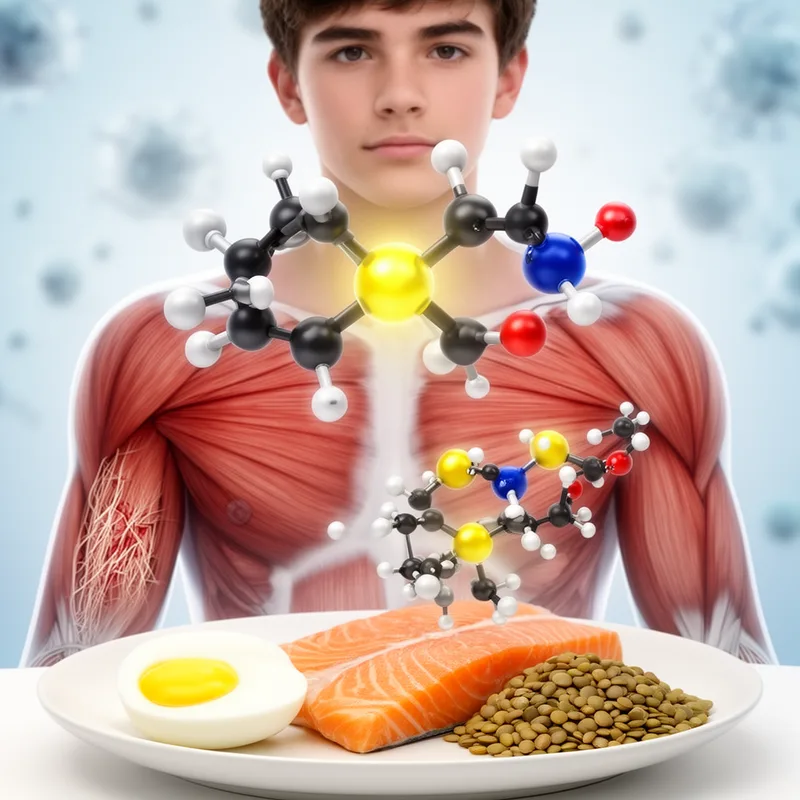
methionine
 1
7.0

- noun
- /mɛˈθaɪəˌniːn/
- Specialized
- One child had abnormal methylfolate metabolism, one had abnormal methylcobalamin metabolism, and one had hypermethioninaemia probably caused by methionine adenosyltransferase deficiency.
- methionine and adenosylmethionine
- deficiency of methionine
- methionine concentrations
Loading YouTube…
Watch on YouTubeAnd if you're really concerning yourself with hypertrophy, I think the three most important amino acids would be leucine, lysine and methionine.
- And if you're really concerning yourself with hypertrophy, I think the three most important amino acids would be leucine, lysine and methionine.
Examples
-
After baseline studies when he was 3 years old, the patient started oral L-methionine treatment (160 mg three times daily).
Academic text (1991) -
Also, legumes are low in methionine, and grains are low in lysine.
Blog text (30) -
If you only ate beans, you'd run out of methionine before you got enough.
-
Our body combines L-arginine, glycine, and L-methionine to make creatine.
Blog text (29) -
The methyl donor-deficient diet contained 90% less choline, folate, and methionine than the control diet.
Academic text (2012) -
The body needs methionine to help produce important proteins.
-
Meat and dairy are good sources of methionine for maintaining human health.
-
Vegetarians often combine foods to meet their methionine requirements.
Surface Forms
Etymology
The word methionine comes from the parts methyl ('a small chemical part') and thio ('sulfur') plus the ending -ine, so the name points to a molecule that has sulfur in it. That's why methionine is the 'sulfur'-containing amino acid that our bodies need from food.