
mete
 1
9.9
1
9.9

- noun
- /miːt/
- Archaic
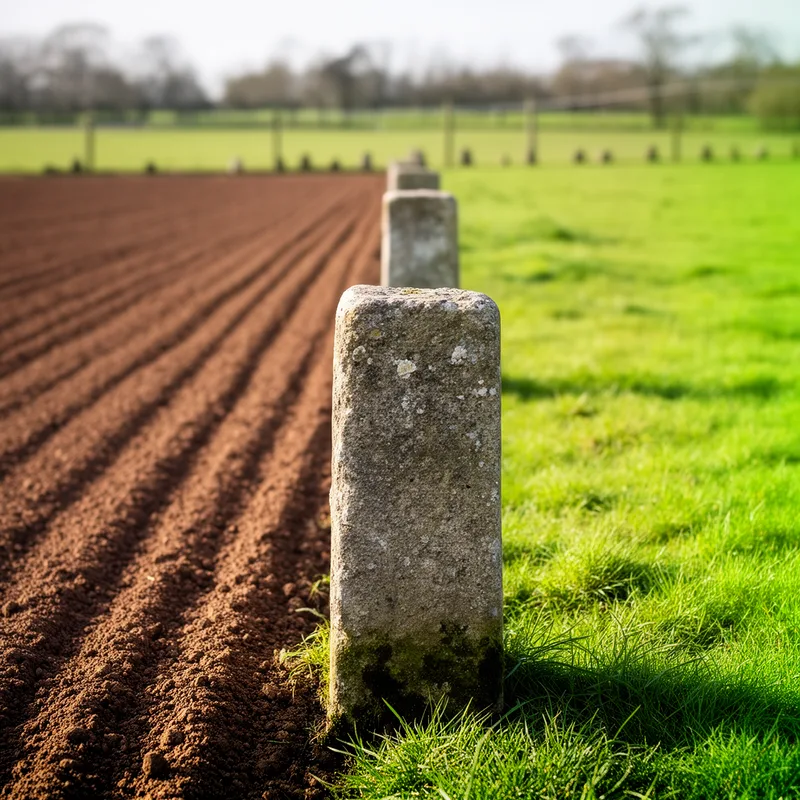
- The map clearly indicated the metes of the national park to prevent trespassing.
- metes and bounds
- metes-and-bounds surveys
Examples
-
Land surveyors use metes to define the precise boundaries of each property.
-
Conflicting land claims, many of them based on superficial or incomplete metes-and-bounds surveys, were resolved, in part, by a series of court decisions between 1789 and 1795.
Academic text (2004) -
Once the scientific method was established as a regular cultural practice with generally accepted metes and bounds, this worked.
Blog text (1) -
Thus, the notion that Jerusalem can be easily divided up is frivolous to anyone who actually walks its metes and bounds.
Academic text (1996) -
Congress certainly could have set the precise metes and bounds of the District itself and also could have approved details of each building itself, but the legislators found it unnecessary to specify further details.
Academic text (2016) -
PHOTO (BLACK & WHITE): FIG. 1 -- Old county roads in central Kentucky followed metes-and-bounds property lines, like those of New England in George Washington's time.
Academic text (1998) -
Then came the orientation of inland towns to the surrounding land cadastre, whether within the metes-and-bounds informality of the DLC survey boundaries or the cardinal rigidity of the U.S. land survey.
Academic text (2006) -
Historically, farmers marked their land with metes to establish ownership and avoid disputes.
Synonyms
 ∞
1.0
∞
1.0
A row of words on a page, for example in an ad
 ∞
1.0
∞
1.0
A line that separates two countries or regions
 232
3.1
232
3.1
A line or fence that marks the edge of an area and separates it from another
 9
4.1
9
4.1
A line that shows the edge between two places or countries
 9
6.8
9
6.8
A clear line or limit that shows the difference between things
 2
3.1
2
3.1
A line that shows the edge between two areas
 2
5.5
2
5.5
A line or border that shows where one area ends and another begins

 1
8.0
1
8.0
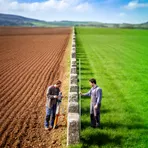
A line or limit that shows where one area ends and another begins
Surface Forms
Etymology
The word mete as a boundary comes from an old word like measure meaning 'to measure', so a mete was a mark that showed how far the land was measured and where it ends.