
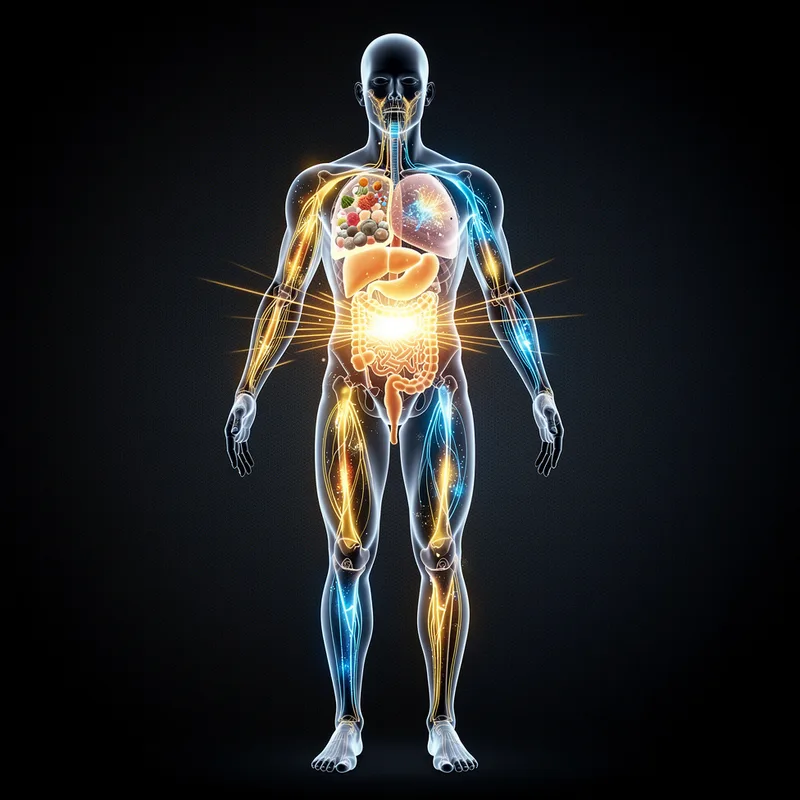
metabolism
 79
4.3
79
4.3

- noun
- /məˈtæbəlɪzəm/
- Specialized
- Yes, their metabolisms are slowing down.
- cellular metabolism
- aerobic metabolism
- anaerobic metabolism
Loading YouTube…
Watch on YouTubeMore muscle helps to boost metabolism and helps as we age.
- More muscle helps to boost metabolism and helps as we age.
- All of these things disrupt metabolism and mitochondrial function.
- And what happens for most people is that their metabolism slows down.
- Life pushes this metabolism down to create fixed nitrogen.
- And that is helpful in regulating the metabolism of the cell.
- So, and also it's a large part of metabolism too.
- So these are two big hormonal drivers of metabolism.
- As far as we know, whatever life is, it will require metabolism.
- Any living being has to run through metabolism.
Examples
-
Once you work out, your metabolism starts to speed up, you can eat anything you want.
-
Hummingbirds have a metabolism 77 times faster than ours.
-
We know that something gets set off and our metabolism changes.
-
Oh, with that young metabolism, you have to enjoy it while you can.
-
And what we found were dramatic changes in the metabolism of the body.
-
I have a high metabolism.
-
Your life span gets longer, your cancer rates go down, your metabolism goes up.
-
More muscle helps to boost metabolism and helps as we age.
-
And what happens for most people is that their metabolism slows down.
-
Regular exercise can enhance your metabolism, helping your body convert food into energy more efficiently.
Synonyms
 2
4.1
2
4.1
Processes inside a living cell or body that make and use energy to keep it alive
Compounds


- Specialized
A process that builds tissues and stores energy in living things

- Specialized
The process that breaks down food and body tissue to release energy

- Specialized
A health problem passed from parents that makes the body unable to use food properly
How Fast
- Specialized
9
4.2

- Specialized
79
4.3
Surface Forms
Morphology
metabolism = metabolic (semi-transparent) = metabol + ism
The word is built from the bound root 'metabol-' plus the suffix '-ism'; 'metabol-' is not a standalone English word and the internal pieces ('meta-' + 'bol-') are not transparently meaningful to most learners, though the relation to 'metabolic'/'metabolize' may help.
Etymology
Metabolism comes from the Greek word metabolē, based on meta- which means 'change', and the same root appears in metamorphosis. So metabolism is the body's process of changing food into energy and waste.