
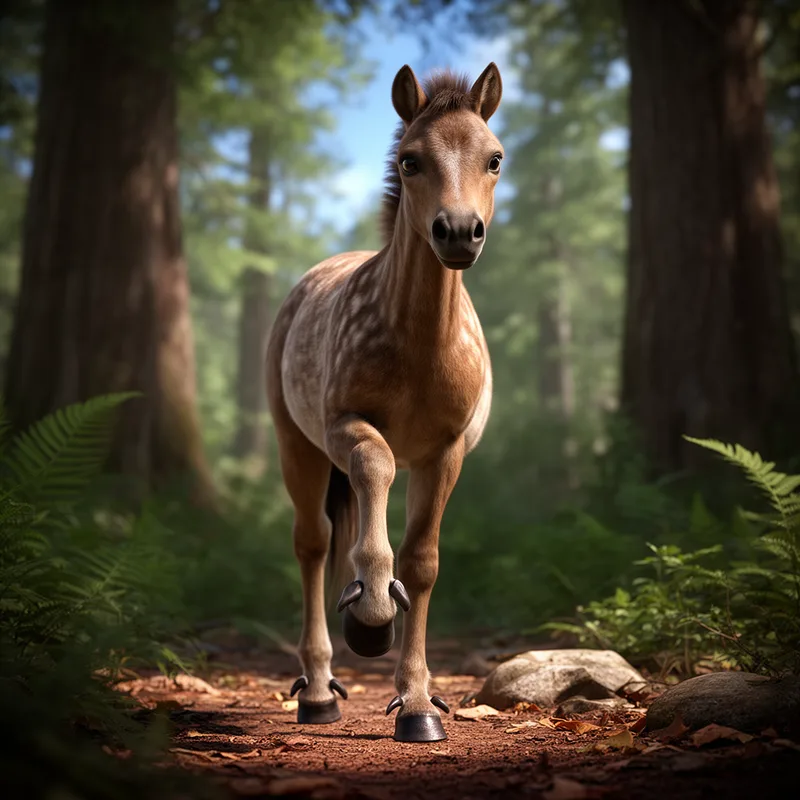
mesohippus
- noun
- /ˌmɛzoʊˈhɪpəs/
- Specialized
- Fossils of mesohippus reveal it had three toes on each foot rather than a single hoof.
Examples
-
Researchers believe mesohippus was adapted to woodland habitats, unlike later grassland-dwelling horses.
-
The mesohippus roamed North America approximately 37 to 32 million years ago.
-
The mesohippus roamed North America millions of years ago.
-
Did you know that the mesohippus had three toes?
-
Fossils of mesohippus reveal it had three toes on each foot rather than a single hoof.
-
Researchers believe mesohippus was adapted to woodland habitats, unlike later grassland-dwelling horses.
-
The mesohippus roamed North America approximately 37 to 32 million years ago.
Surface Forms
Morphology
mesohippus = meso + hippus
Although built from recognisable scientific combining forms ('meso-' = middle, 'hippus' = horse), these are specialized classical elements not productive standalone English words for a typical B1 learner, so the meaning is not directly derivable.
Etymology
Mesohippus comes from the Greek parts meso- ('middle') and hippos ('horse'), so the name means 'middle horse' and helps you remember it was a small, extinct horse that lived between earlier and later types.

