
meristem


 1
9.8
- noun
- /ˈmɛrəˌstɛm/
- Specialized
- The apical meristem at the tip of the shoot allows the plant to grow taller as new cells are formed.
- floral meristem
- meristem identity genes
Examples
-
AP1 homologues are therefore more accurately described as floral meristem identity genes—genes that direct a meristem to become a flower.
Academic text (2006) -
AP1 also plays a more basic role, one that is outside the scope of the ABC model: directing the meristem to form a flower.
Academic text (2006) -
New growth will come the following year from the surviving apical meristem (branch tip).
Blog text (2) -
When A and B genes both act in the outer two regions of the meristem, two whorls of petals form.
Academic text (2006) -
Later, in the developing floral meristem, B, C, and E genes kick in to make petals, stamens, and carpels.
Academic text (2006) -
By contrast, the links between leaf initiation rate, relative growth rate, and meristem number are weaker or absent under well-watered conditions.
Academic text (2000) -
For example, in a given population, the first spores to germinate produce gametophytes that mature with meristems and archegonia.
Academic text (2002) -
The genes that act in a given whorl of a floral meristem determine which kind of organ (sepal, petal, stamen, or carpel) the whorl grows into.
Academic text (2006) -
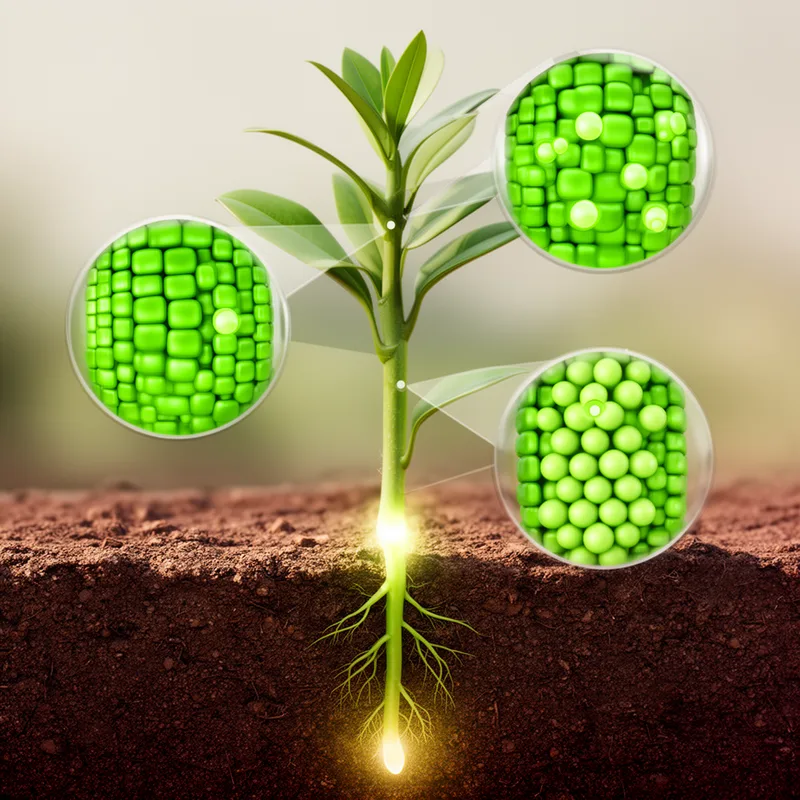
Plant growth typically occurs in the meristem, where cell division creates new tissues.
-
When you cut off the tip of the plant, the remaining meristem will generate new leaves and stems.
Surface Forms
Etymology
The word meristem comes from Greek roots like merizein meaning 'to divide' and meristos meaning 'a divided part', so it names the plant 'part' where cells keep dividing and cause growth.