
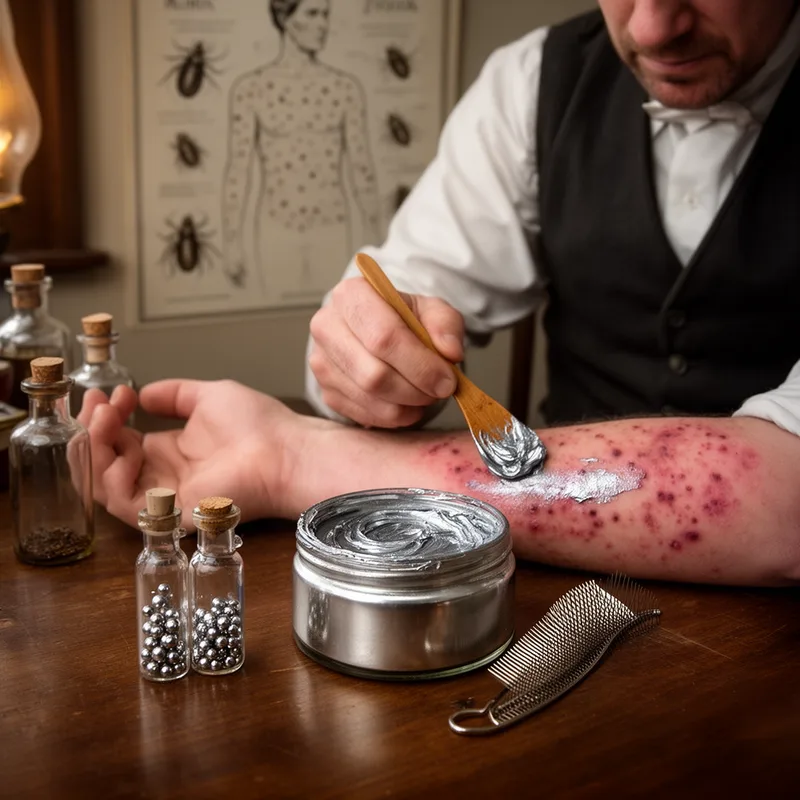
mercurial ointment
- noun
- /mɜrˈkjʊəriəl ˈɔɪntmənt/
- Archaic
- In the nineteenth century, mercurial ointment was commonly used to treat syphilis.
Examples
-
Due to mercury's toxicity, modern medicine no longer recommends mercurial ointment.
-
The doctor prescribed mercurial ointment for his skin condition, following the traditional treatment.
-
The doctor prescribed a mercurial ointment for her skin condition.
-
Have you ever used mercurial ointment for treatment?
-
In the nineteenth century, mercurial ointment was commonly used to treat syphilis.
-
The doctor prescribed mercurial ointment for his skin condition, following the traditional treatment.
-
Due to mercury's toxicity, modern medicine no longer recommends mercurial ointment.
Synonyms

 1
9.9
1
9.9

A red liquid used to clean small cuts that contains mercury
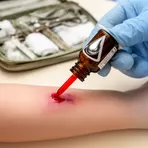
A red liquid used on cuts to prevent infection that contains mercury
Surface Forms
Morphology
The meaning is directly compositional: 'mercurial' (containing mercury) modifies 'ointment' (a topical salve), yielding 'an ointment containing mercury.' This adjective+noun formation follows regular word-formation patterns and is cross-linguistically transparent, so a B1 learner who knows both constituents would infer the meaning.
Etymology
Mercurial ointment comes from the metal mercury and the word ointment; in the past people mixed the shiny metal into a greasy medicine and rubbed it on sores or to kill lice. Because mercury is 'poisonous', these treatments often harmed people, so today the term means an ointment that contains mercury and is no longer used.