
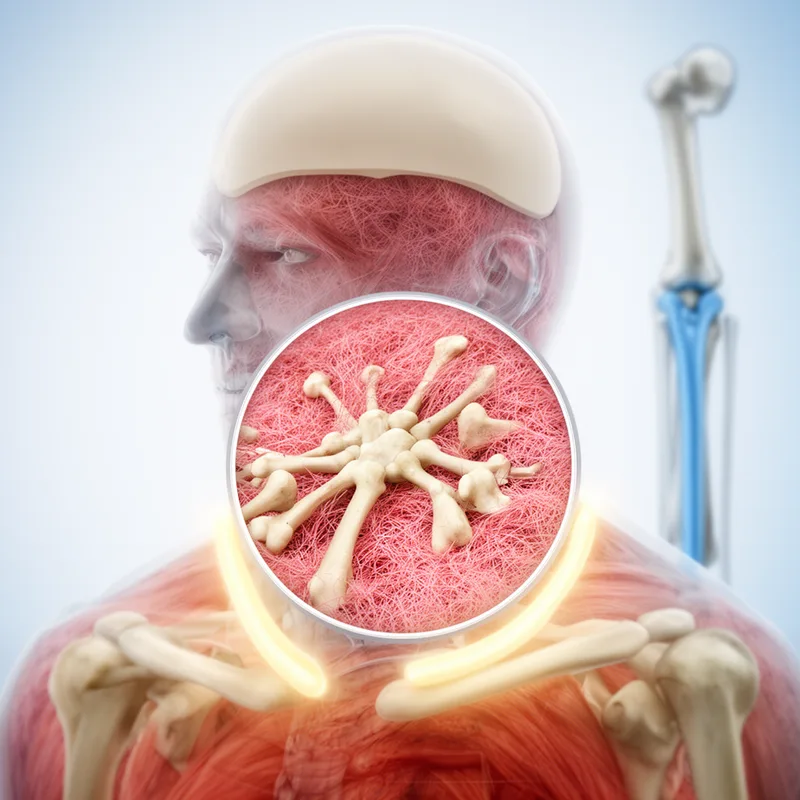
membrane bone
- noun
- Specialized
- The clavicle is a membrane bone that forms directly within connective tissue.
Examples
-
Unlike long bones, a membrane bone does not develop from cartilage.
-
Certain skull bones, like the parietal bone, are classified as membrane bones.
-
The membrane bone is essential for the structure of the skull.
-
Clavicles are classified as membrane bones.
-
The clavicle is a membrane bone that develops directly from membranous tissue.
-
Certain skull bones, like the parietal bone, are examples of membrane bones.
-
A membrane bone develops within connective tissue, unlike bones that form from cartilage.
Surface Forms
Morphology
The compound clearly links 'membrane' and 'bone', so a learner who knows both words can infer it refers to a bone associated with membranous tissue (i.e., a bone related to a membrane). However, the precise anatomical/developmental sense — that it forms within membranous tissue rather than from cartilage — is technical domain knowledge and not fully predictable for an average B1 learner, so the transparency is only partial.
Etymology
Membrane bone names a bone that grows directly inside a thin soft layer called a membrane, instead of starting 'from cartilage'. The picture of a bone forming inside a sheet of tissue helps explain why the term means a bone that 'develops within' membranous tissue.

