
melanocyte-stimulating hormone
- noun
- /ˌmɛləˈnoʊsaɪt ˈstɪmjʊleɪtɪŋ hɔrmən/
- Specialized
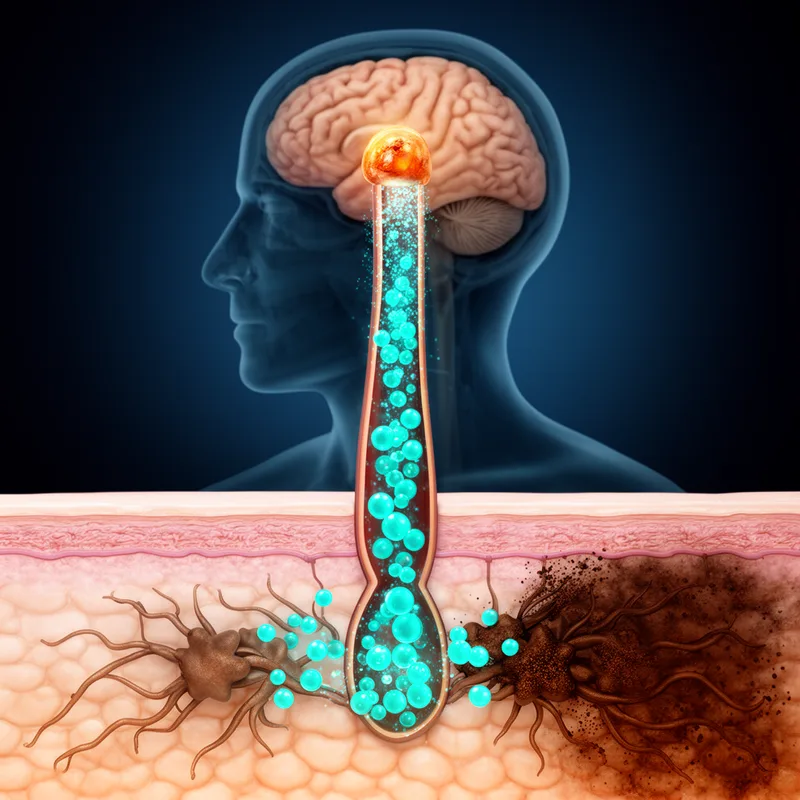
- The pituitary gland releases melanocyte-stimulating hormone to influence the color of the skin.
Examples
-
An excess of melanocyte-stimulating hormone can cause skin darkening in some medical conditions.
-
Researchers are studying how melanocyte-stimulating hormone affects pigmentation disorders.
-
The melanocyte-stimulating hormone plays a crucial role in skin pigmentation.
-
Can you explain what melanocyte-stimulating hormone does?
-
An excess of melanocyte-stimulating hormone can cause skin darkening in some medical conditions.
-
The pituitary gland releases melanocyte-stimulating hormone to influence the color of the skin.
-
Researchers are studying how melanocyte-stimulating hormone affects pigmentation disorders.
Synonyms

A hormone made by a small gland in the brain that controls skin and hair color
Surface Forms
Morphology
melanocyte-stimulating + hormone
The phrase is fully compositional: 'melanocyte-stimulating' decomposes into 'melanocyte' (pigment cell) + 'stimulating' (causing activity) and 'hormone' (chemical messenger), so a learner who knows those parts can infer it is a hormone that stimulates pigment cells. The '-stimulating hormone' pattern is a regular, productive English formation and is cross-linguistically transparent, making the overall meaning predictable despite its technical register.
Etymology
Melanocyte-stimulating hormone is a scientific name that literally says what it does: it is a hormone that stimulates melanocytes, the skin cells that make pigment. So the name reminds you that this chemical tells those cells 'to make more pigment', which is why it changes skin color.

