
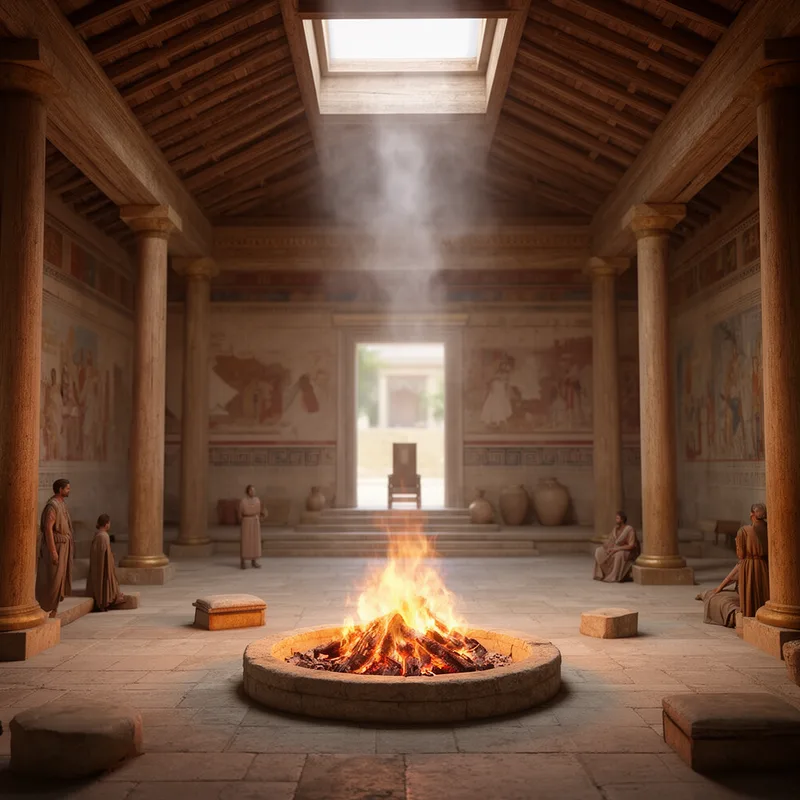
megaron


 1
9.9
- noun
- /ˈmɛɡəˌrɒn/
- Specialized
- In both the Mycenaean and post-Mycenaean worlds, megarons (large buildings with a porch and central hearth, and sometimes a throne) were used as meeting and ceremonial halls.
- megaron building
Examples
-
During the archaeological tour, we entered the spacious megaron where ancient ceremonies were once held.
-
The ancient Greeks used the megaron as a central gathering place in their palaces, often featuring a large hearth.
-
PHOTO (COLOR): Archaeologists excavate the western exterior wall of a large, rectangular megaron-type building.
Academic text (2008) -
Despite later associations of sacredness with basilicas, that type of building, similar to the megaron, with its significant predecessors in the Near East, was not originally intended as a religious edifice.
Academic text (2000) -
PHOTO (COLOR): The north and south walls of the rear room of the megaron building, as detected by gradiometer readings, top left; ground-penetrating radar, top right; and excavation.
Academic text (2008) -
What Pausanias saw in the remaining fragments of classical religious architecture were the outlines of monumental megarons of a style dating back to the Mycenaean era.
Academic text (2000) -
Excavations revealed a beautifully preserved megaron that served as the main hall in the Mycenaean palace.
Synonyms
 19
5.1
A very large room in a castle or large house where people eat and have large gatherings
How Big

Surface Forms
Etymology
Megaron comes from the ancient Greek μέγαρον, which means 'large hall' or 'big room' and is related to the English prefix mega- meaning 'big'. So a megaron was the main central room in a palace, often with a fireplace, and that is why the word means a large palace hall today.