
medullary ray
- noun
- /ˈmɛdʌlɛri reɪ/
- Specialized
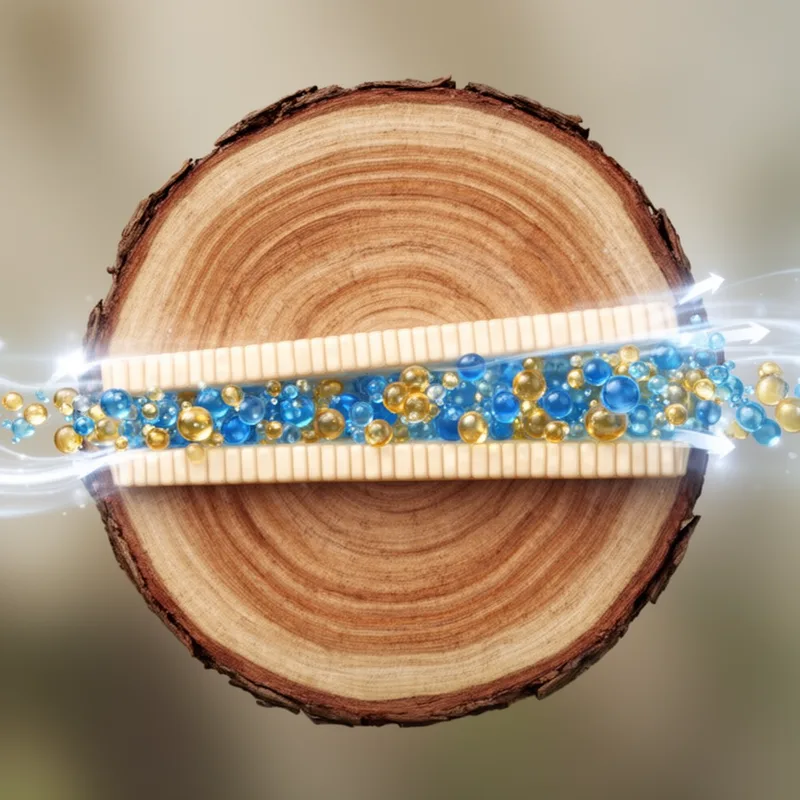
- The medullary ray can easily be seen in a cross-section of a woody stem.
Examples
-
Scientists study the medullary rays to better understand nutrient transport in trees.
-
In many trees, medullary rays help in the transport of nutrients.
-
In many plants, the medullary ray divides the vascular bundles and aids in water movement.
-
The medullary ray plays an important role in plant structure.
-
In many plants, the medullary ray divides the vascular bundles and aids in water movement.
-
Scientists study the medullary rays to better understand nutrient transport in trees.
-
The medullary ray can easily be seen in a cross-section of a woody stem.
Synonyms

A thin layer of cells in a plant stem that moves water and food sideways
Surface Forms
Morphology
The elements 'medullary' (relating to the medulla or central tissue) and 'ray' (a radiating or sheet-like structure) transparently suggest a radial structure arising from central plant tissue, so a B1 learner could infer a general anatomical/structural sense. However, the precise botanical function and specific anatomical details (parenchyma sheets separating vascular bundles and facilitating radial transport) are technical and not fully predictable from the parts alone, so full understanding requires specialist knowledge.
Etymology
Medullary ray comes from a word for soft 'marrow' or inner part (medullary) and a 'ray' or 'spoke' that runs out from the centre (ray). The tissue is a thin sheet that runs from a plant's centre out toward the outer part like a spoke and helps water and nutrients move across the stem, so the name describes what it does today.

