
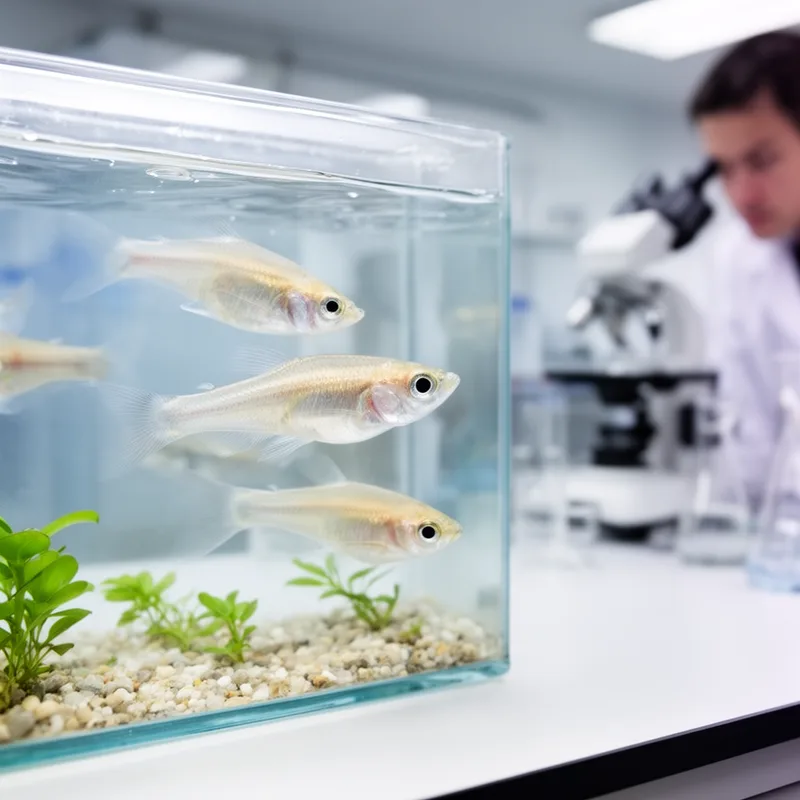
medaka


 1
8.6
- noun
- /mɛˈdɑːkə/
- Specialized
- Medaka hearts normally beat at a frequency of around 130 beats per minute (bpm), i.e., 2.2 Hz.
- medaka embryos
Examples
-
Researchers use medaka in experiments to study the effects of pollution on freshwater ecosystems.
-
In Japan, many schools keep medaka in classrooms to teach students about aquatic biology.
-
In this article, we have detailed an image analysis pipeline for detecting the living status of a Medaka embryo.
Academic text (2016) -
Medaka (Oryzias latipes) develops quickly (hatching normally occurs between 7 and 9 days post-fertilization).
Academic text (2016) -
FTOHs also induced vitellogenin in male medaka fish through the activation of ER, whereas PFOS and PFOA did not (Ishibashi et al. 2008).
Academic text (2012) -
The non-selective beta-blocking agent propranolol was found to cause a significant decrease in egg production in medaka fish at a concentration close to that demonstrated in the sewage treatment plants (STP) effluents.
Blog text (1) -
The medaka fish is a popular choice for aquarists due to its vibrant colors and small size.
Surface Forms
Etymology
The word medaka comes from Japanese and is made of the parts me meaning 'eye' and taka meaning 'high', so its name is like 'high eye' because the fish's eyes sit high on its head. That's why medaka is the common name for this small freshwater fish often kept in aquariums and used in research.