
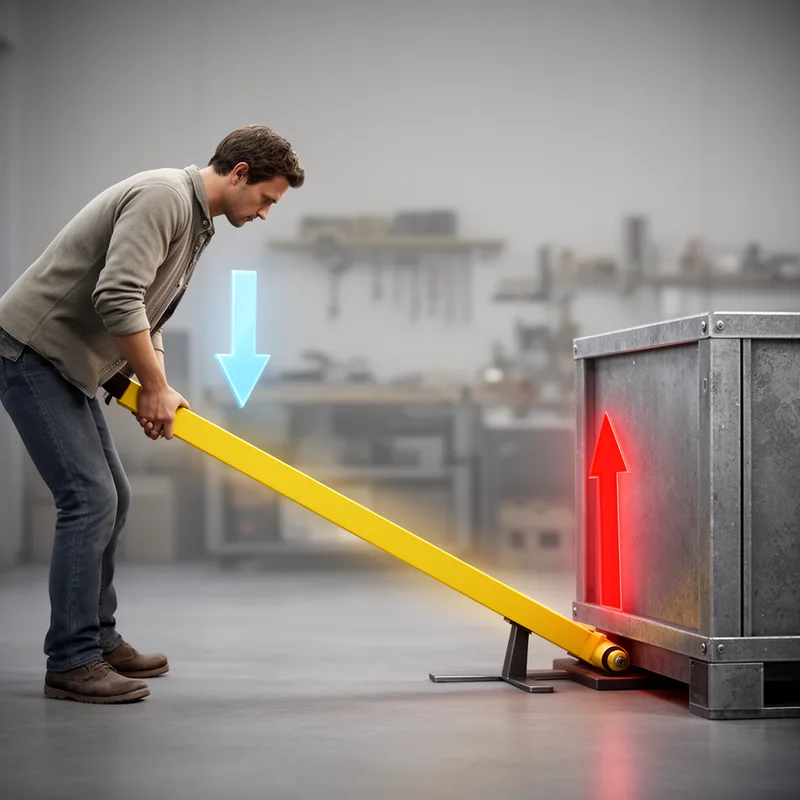
mechanical advantage
- noun
- /mɪˈkænɪkəl ədˈvæntɪdʒ/
- Specialized
- The screw threads in screw-type nutcrackers provide a larger mechanical advantage than lever-type units have, and friction in the threads resists and arrests motion.
- provide a mechanical advantage
- range of mechanical advantages
- different mechanical advantages
Loading YouTube…
Watch on YouTubeSo we, we have this amazing mechanical advantage by having a diaphragm.
- So we, we have this amazing mechanical advantage by having a diaphragm.
Examples
-
Teach students about mechanical advantage.
Academic text (2007) -
Mechanical advantage -- increase in force developed from a mechanism.
Academic text (2007) -
Above all, they provide a mechanical advantage, which can be used to improve the feel or the control of a mechanism, tool, or actuator.
Academic text (2011) -
A simple machine does one of two things: create a mechanical advantage (lever) or change the direction of an applied force (pulley).
Academic text (2012) -
The mechanical advantage of pliers or tin snips is obvious enough, but a subtler example is the detent positioning of a rotating knob.
Academic text (2011) -
Using a lever gives you a mechanical advantage, allowing you to lift heavy objects with less effort.
-
The mechanical advantage provided by the pulley system made it easy for the workers to raise the heavy load.
-
To understand mechanical advantage, consider how a small force can lift a much larger weight when using a ramp.
Synonyms
 9
4.9
9
4.9

Extra force you get when using a lever to move something
Surface Forms
Morphology
A B1 learner who knows 'mechanical' (relating to machines) and 'advantage' (a favorable position) can infer that 'mechanical advantage' refers to a benefit or advantage provided by a machine, so the compound is partially predictable. However, the precise technical meaning — the specific ratio of output to input force and how a machine amplifies force — is specialized and not directly derivable from the constituents, making the expression only partially transparent.
Etymology
Mechanical advantage comes from simple tools like levers and pulleys, where a small push on one part makes a much bigger push on another part. So the phrase means how much a tool 'makes your push stronger'.