
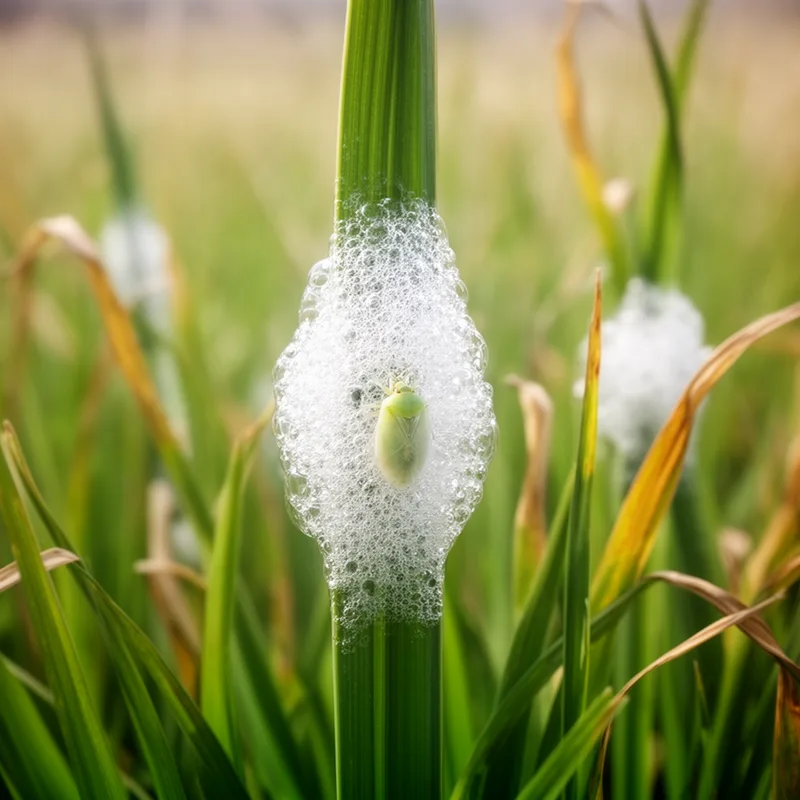
meadow spittlebug
- noun
- /ˈmɛdoʊ ˈspɪtəlˌbʌg/
- US
- Gardeners are advised to watch for frothy masses, signs that meadow spittlebug nymphs are feeding on their plants.
Examples
-
A severe infestation of meadow spittlebugs can weaken a lawn and reduce crop yields.
-
The meadow spittlebug is commonly seen on grass blades in late spring and summer.
-
Look at that meadow spittlebug hopping around!
-
The meadow spittlebug is often found in grassy fields.
-
A severe infestation of meadow spittlebugs can weaken a lawn and reduce crop yields.
-
Gardeners are advised to watch for frothy masses, signs that meadow spittlebug nymphs are feeding on their plants.
-
The meadow spittlebug is commonly seen on grass blades in late spring and summer.
Synonyms
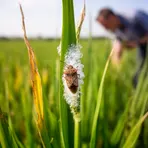
A small insect called a spittlebug that damages grasses and crops in Europe and North America
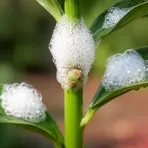
A small insect that eats plants and lives inside a frothy foam on stems and leaves
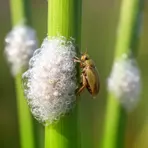
A small jumping insect that lives in frothy bubbles on plant stems to protect its young
Surface Forms
Morphology
The compound combines 'meadow' (a grassland) with 'spittlebug' (an insect that makes frothy secretions), so a learner who knows both words can infer it refers to a spittlebug found in meadows. There is no idiomatic or metaphorical shift and the noun-modifier composition is a standard, cross-linguistic pattern, making the meaning directly derivable.
Etymology
Meadow spittlebug is named for what it does and where it lives: the insect lives in a meadow and its young cover themselves in a foamy, spit-like mass called spittle on grass and plants. That clear image — little bugs hiding in 'spittle' foam in a meadow — is why the name refers to this insect today.

