
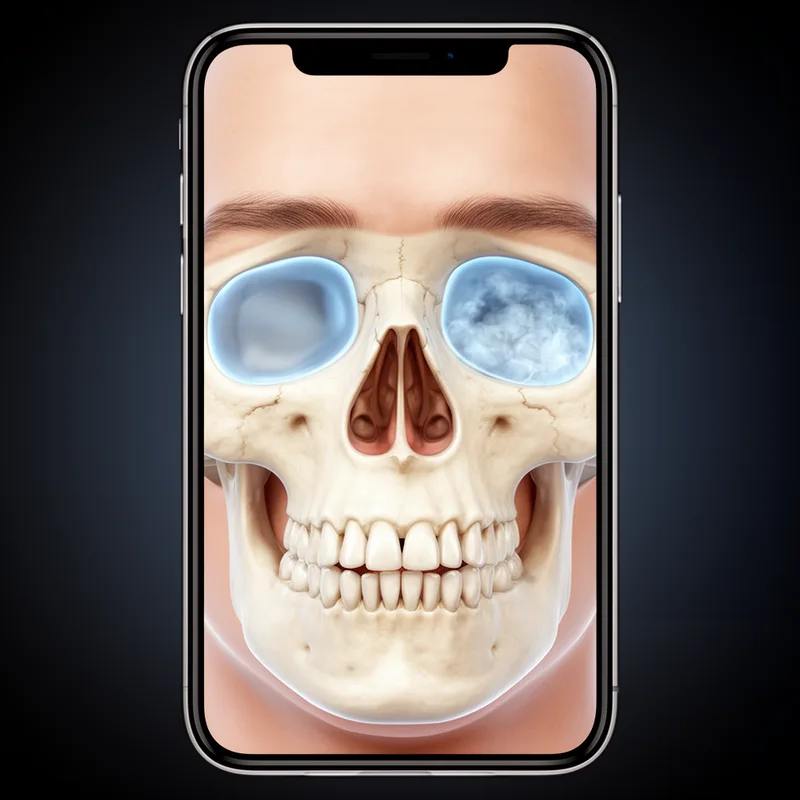
maxillary sinus


 1
6.4
1
6.4
- noun
- /ˈmæksɪˌlɛri ˈsaɪnəs/
- Specialized
- Inflammation of the maxillary sinus can lead to severe facial pain and discomfort.
- left maxillary sinus
- right maxillary sinus
- maxillary sinus wall
Examples
-
The most common sites of these tumors are the ethmoid and maxillary sinuses.
Academic text (2004) -
Fungus balls are tangled mats of hyphae that are often found in the maxillary sinus.
Academic text (2004) -
In Finland, it is very popular to study the maxillary sinuses using ultrasound, especially in children.
Academic text (1998) -
Shugar et al. presented a case of a primary chordoma of the maxillary sinus.
Academic text (2005) -
The pathogenesis of ossification in the maxillary sinus is still unclear.
Academic text (2009) -
In this article, we describe a case of arteriovenous malformation in the maxillary sinus and mandible.
Academic text (2003) -
Staphylococcus aureus was cultured from the left maxillary sinus contents, and the patient was treated accordingly.
Academic text (2009) -
We studied the bacteriology of maxillary sinus aspirates obtained from patients diagnosed with chronic sinusitis.
Academic text (2003) -
The main treatment goals are to relieve the osteomeatal obstruction, decompress the maxillary sinus, and repair the cosmetic defect.
Academic text (2008) -
Doctors often use imaging techniques to examine the maxillary sinus for signs of infection.
Synonyms
 40
3.9
40
3.9
An air-filled cavity in skull bones near the nose that connects to the inside of the nose
 1
5.4
1
5.4
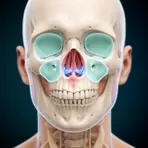
Air-filled spaces in the bones around the nose that connect to the inside of the nose

Hollow spaces in the bones around the nose lined with a thin wet layer

An air space in the bones near the nose lined with mucus
Surface Forms
Morphology
The noun phrase is transparently compositional: 'maxillary' (relating to the upper jaw/maxilla) combined with 'sinus' (an air-filled cavity) directly yields the meaning 'the sinus located in the maxilla/upper jaw'. Although it's specialized medical vocabulary, the descriptive naming follows regular morphological and semantic patterns common across languages, so a learner who knows the constituents can infer the meaning.
Etymology
Maxillary sinus comes from two parts: maxillary, meaning the 'upper jaw' bone, and sinus, meaning a 'hollow' or 'air pocket'. So the name shows an air-filled space next to the nose in the upper jaw, which is why it refers to that cavity today.