
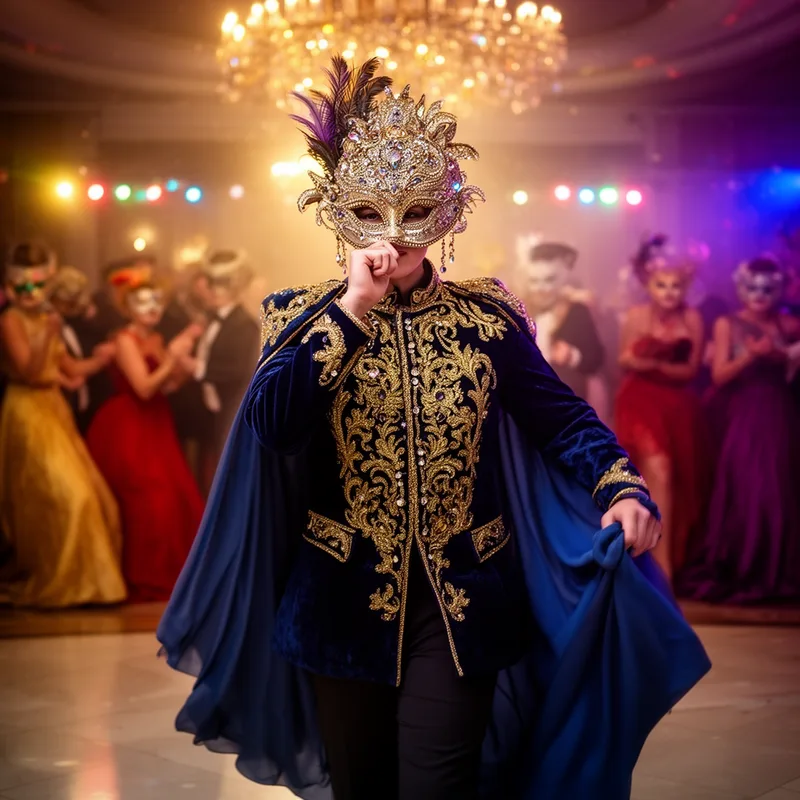
masker


 1
7.1
1
7.1
- noun
- /ˈmæskər/
- Just as they change color, so the Egungun masker changes into an ancestor, yet maintains his inner essence.
- masker's costume
- noise masker
- spirit maskers
Examples
-
In the accounts of the elders, the costumed masker presents a spirit made partially visible, not an ordinary human.
Academic text (2010) -
In performances honoring ancestors, exquisite cloth is the major medium for the masker's transformation.
Academic text (1995) -
The audience rewarded the young masker and the entire performance with expressions of pleasure and applause.
Academic text (2003) -
My father was a child of the Komo and a Komo masker in his youth.
Academic text (2008) -
After dancing vigorously with her mother, the daughter danced by herself while the other maskers withdrew.
Academic text (2003) -
The overflap conceals the face netting but allows the masker to see out from underneath.
Academic text (1995) -
Adamma's masker, like many Igbo maiden-spirit maskers, was tall (Cole & Aniakor 1984:121) and towered over him.
Academic text (2003) -
The lively masker twirled on stage, captivating the audience with every movement.
-
During the festival, each masker showcased intricate designs and vibrant colors.
-
The masker stepped into the spotlight, revealing a stunning mask that symbolized their culture.
Synonyms

A person who wears a mask and costume to hide who they are at a party

A person who wears a mask and costume at a party or event
Antonyms

How Disguised
 1
7.1
1
7.1
Surface Forms
Morphology
Etymology
Masker comes from the simple word mask, which means 'cover for the face', plus the ending -er meaning 'person who'. Think of a masquerade party: a masker is someone who wears a mask, which is why the word means 'a person who wears a mask'.