
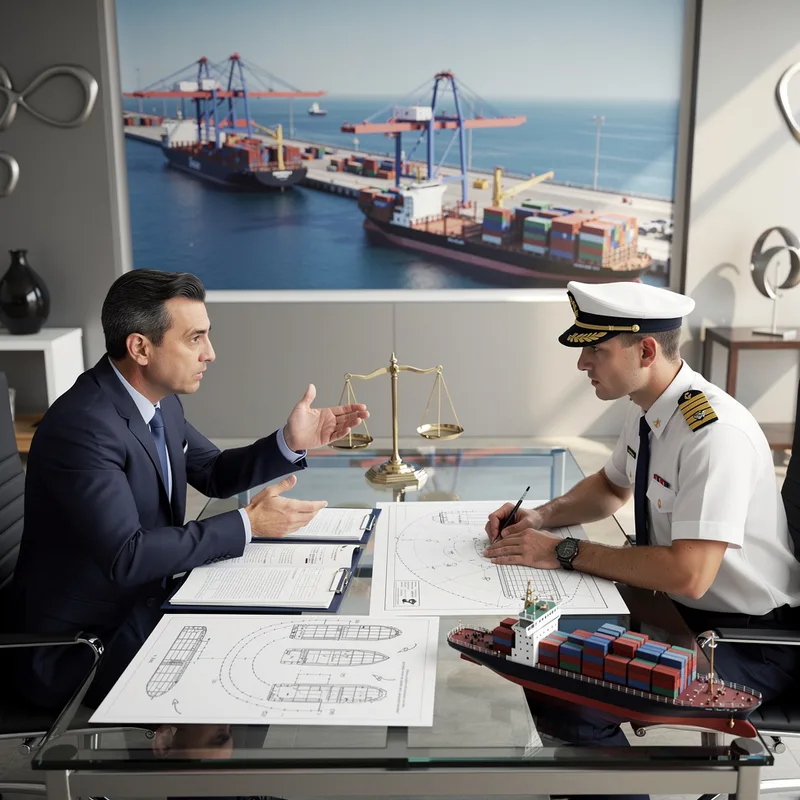
maritime law
 3
6.0
3
6.0

- noun
- /ˈmɛrɪˌtaɪm lɔ/
- Specialized
- Maritime law provides guidelines for handling disputes that arise during voyages on navigable waters.
- maritime law enforcement
- provisions concerning maritime law
- claims under maritime law
Loading YouTube…
Watch on YouTubecompany, you can still bring suit in the US under applying US maritime law.
- company, you can still bring suit in the US under applying US maritime law.
Examples
-
If maritime law is found controlling, however, recovery may be limited to commercial fishers.
Academic text (1990) -
Most states at the Hague Conference on maritime law accepted exceptional claims to bays (not waters more generally) based on historic jurisdiction.
Academic text (2016) -
If you want to look into it, research maritime law and jurisdiction.
Blog text (14) -
Such obligations are not required under Korean maritime law.
Academic text (2017) -
The case involved both maritime law issues as well as bankruptcy law issues, requiring the maritime lawyers to work with bankruptcy lawyers.
Academic text (2017) -
In the past, maritime law limited this activity to maritime service, navigation, or commerce on navigable waters.
Academic text (1990) -
Perhaps the most venerable and universal rule of maritime law relevant to our problem is that which gives cardinal importance to the law of the flag.
Academic text (2016) -
Given this sea change in maritime law, it is striking to note the degree to which historic doctrines for maritime sovereignty remained unchanged.
Academic text (2016) -
You testified that you and Calvin broke into the ship's pantry, which, under maritime law, is considered looting on the high seas.
-
Instead, the Court contemplated concurrent jurisdiction where state law does not interfere with the uniformity and simplicity of maritime law.
Academic text (1990)
Synonyms
 1
7.9
1
7.9
Rules that deal with ships, boats, and activities at sea
 1
8.6
1
8.6
Part of law about ships and sea trade


 1
5.3
1
5.3
Rules that control activities at sea, including shipping and fishing
Antonyms

Surface Forms
Morphology
The meaning 'the branch of law dealing with the sea' is directly and transparently derived from combining 'maritime' (pertaining to the sea) with 'law' (rules or legal system). This is a straightforward compositional noun-noun construction that exists across languages, so a B1 learner who knows both constituents would readily infer the MWE meaning.
Etymology
The noun maritime law comes from a simple idea: people working on ships and in ports needed special rules to settle fights, accidents, and trade at sea. So, maritime means 'sea' and law means the rules, and the phrase means the rules for ships and trade on the sea.