
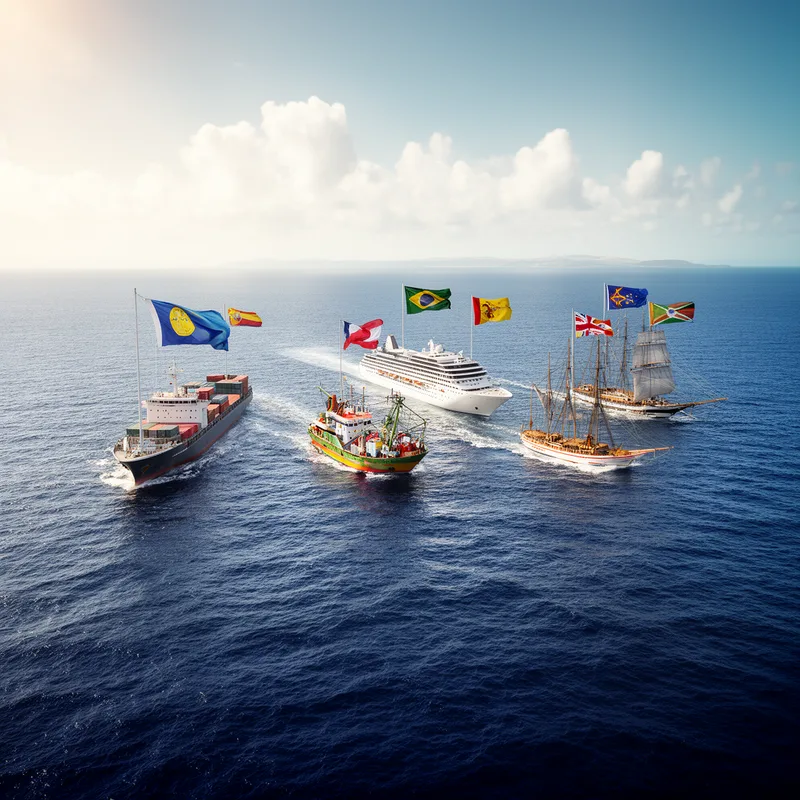
mare liberum
- noun
- /ˈmɛrɪ ˈliːbərəm/
- Formal
- As a legal concept, mare liberum allows ships from any nation to traverse the ocean without hindrance.
Examples
-
Grotius' treatise 'Mare Liberum' defended the idea that the sea should remain mare liberum for trade and travel.
-
The principle of mare liberum forms the basis of international maritime law today.
-
Disputes often arise when countries challenge the concept of mare liberum in strategic waterways.
-
The concept of mare liberum promotes free navigation.
-
Countries must respect the principle of mare liberum.
-
Countries must adhere to the principle of mare liberum, ensuring that international waters are accessible to all.
-
The principle of mare liberum is crucial for maintaining peace among nations that rely on open sea routes.
Synonyms

 17
3.4
17
3.4

Sea areas that no country controls and where any ship can sail
Antonyms
Surface Forms
Morphology
mare + liberum
The phrase is Latin (mare = sea, liberum = free), so a learner who knows the constituents could infer a literal reading like 'free sea' or 'free seas'. However, the expression carries a specific legal/political meaning ('freedom of the seas' as a principle of international law) that is more technical than the literal composition, so the full intended sense is not completely predictable without domain exposure.
Etymology
Mare liberum literally combines mare 'sea' and liberum 'free' and came from a 1609 book by Hugo Grotius, who said the sea should be like an open road for all ships. That's why mare liberum means 'a sea open for use by all nations'.