
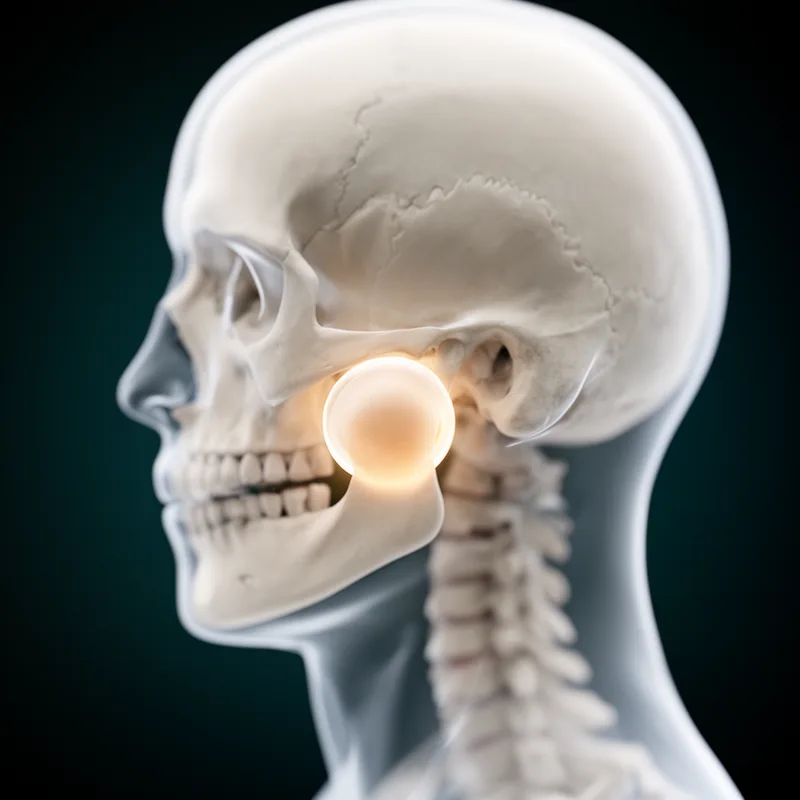
mandibular condyle
- noun
- /mænˈdɪbjʊlər ˈkɒndaɪl/
- Specialized
- The dentist explained that the mandibular condyle is crucial for proper jaw movement.
Examples
-
An injury to the mandibular condyle can result in pain when chewing.
-
During the surgery, the doctor carefully examined the mandibular condyle for any signs of damage.
-
The mass was centered on the temporomandibular joint, and it had eroded the lateral margin of the mandibular condyle.
Academic text (2003)
Synonyms
 1
9.9
1
9.9

A rounded end of a bone that joins with another bone

A rounded bone at the top of the lower jaw that fits the jaw joint

A rounded part at the top of the lower jaw that joins the skull
Surface Forms
Morphology
Both constituents carry literal anatomical meanings—'mandibular' relating to the lower jaw and 'condyle' meaning a rounded bony projection for articulation—so their combination straightforwardly denotes the rounded projection on the mandible that forms the jaw joint. This is a regular nominal compound pattern common in anatomical terminology (and mirrored across languages), so a learner who knows the parts can infer the MWE's meaning.
Etymology
Mandibular condyle comes from words meaning 'lower jaw' and 'knuckle': mandibular relates to the 'lower jaw', and condyle comes from a word for a round 'knuckle' or bump. So the name paints a simple picture — a round bump at the end of the lower jaw that fits into the skull to form the jaw 'joint'.