
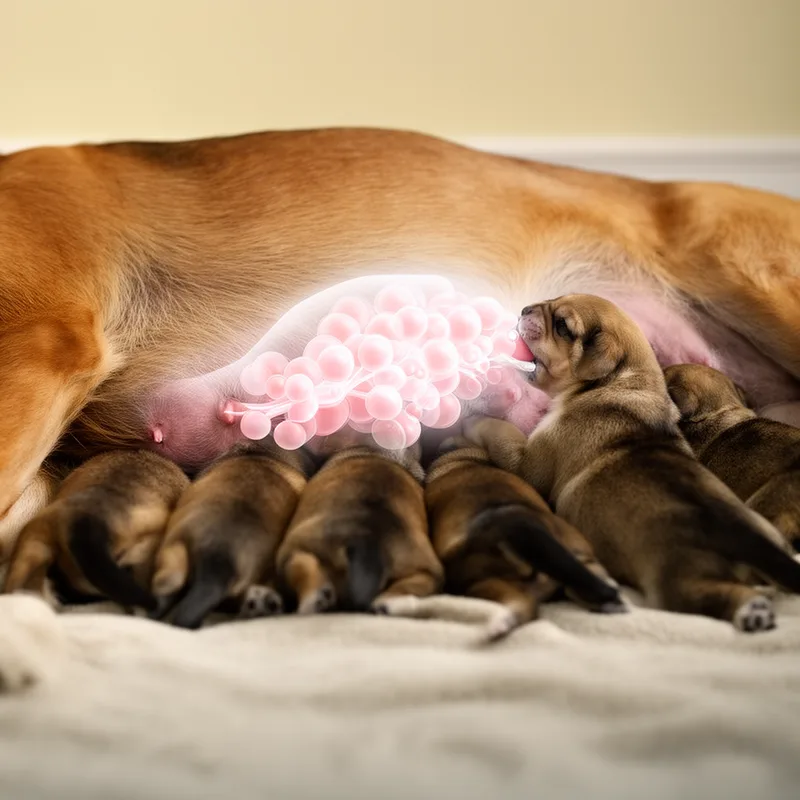
mammary gland
 3
4.1
3
4.1

- noun
- /ˈmæməˌri ɡlænd/
- Specialized
- The mammary gland in female cows produces milk to feed their calves.
- mammary gland development
- mammary gland cell
Examples
-
In female animals, 93 percent of the tumors found were in the mammary glands.
Blog text (32) -
Platypuses, which lay eggs and then nurse the hatchlings, have the disadvantage of not having teats on their mammary glands.
Fiction book (1999) -
So just to give you some background, mammary glands and milk do not fossilize well.
-
Elevated insulin levels in the goat mammary gland increase milk production and the milk protein content.
Blog text (26) -
One important signal of sexual receptiveness in female apes is their mammary glands.
Academic text (2010) -
The marsupial mammary gland is the primary site for nutrient exchange between mother and infant.
Blog text (26) -
And remember now, well, maybe you don't know this, but the mammary gland grows during a pregnancy and during lactation, and then it recedes and it grows again.
-
During pregnancy, a female's mammary gland develops to prepare for nursing her young.
-
Researchers studied how hormones affect the growth of the mammary gland in mice.
Synonyms
 706
1.0
706
1.0
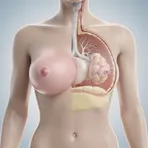
One of the two soft round parts on a woman's chest that make milk
 8
2.8
8
2.8
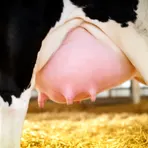
A large bag-shaped part under a cow, goat, or sheep that makes milk
 1
5.8
1
5.8
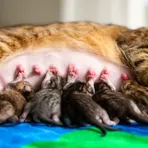
The part of a female animal that makes milk to feed her young
How Informal


Surface Forms
Morphology
The meaning 'milk-secreting organ in female mammals' is directly and compositionally derived from 'mammary' (relating to breasts/milk production) + 'gland' (an organ that secretes fluids). This straightforward noun–noun combination follows regular English formation and has clear parallels in other languages, so a B1 learner who knows both constituents would understand the MWE.
Etymology
The term mammary gland begins with mammary, from an old word 'mamma' meaning 'breast', and the part gland, a small organ that makes a liquid. It is the body part in female mammals that 'makes milk' and feeds their babies, so the name simply tells what it does.