
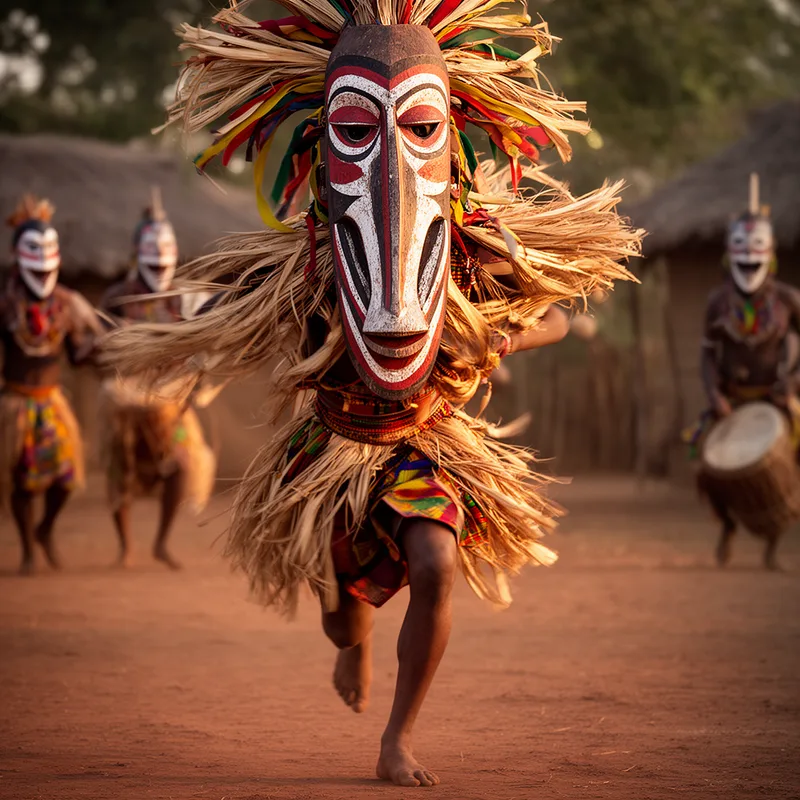
makishi


 1
9.9
- noun
- South African
- While the men and makishi bathe the initiates in a secluded area, the mothers bathe at another spot.
- makishi masks
- makishi dancers
- women's makishi
Examples
-
Women are taught that the makishi's elaborate appearance and characterization belong solely to men.
Academic text (1998) -
During makishi performances in the village, the mothers take the important role of dance leaders.
Academic text (1998) -
More powerful than other medicines, it teaches the women to respect makishi.
Academic text (1998) -
Men keep the makishi's secret, and women allow men to think this is their exclusive knowledge.
Academic text (1998) -
Women transformed into makishi also appear during women's initiations among the Chokwe in Angola.
Academic text (1998) -
The illusion of secrecy is a fundamental difference between men's and women's makishi in the Kabompo District.
Academic text (1998) -
Both cultures distinguish between makishi avamala (masks of men) and makishi avampwevo (masks of women).
Academic text (1998) -
During the festival, the dancers wore stunning makishi masks that mesmerized the audience.
-
The makishi performed intricate movements, showcasing the rich culture of Zambia during the ceremony.
-
At the initiation ceremony, the appearance of the makishi signified the start of important rituals.
Synonyms
A traditional masked dance and secret society of the Chewa people in Malawi, Zambia and Mozambique
Surface Forms
Etymology
The word makishi comes from a local Zambian language where ma- is a word part that means 'more than one' and kishi means a 'masked spirit' or 'masked dancer'. So makishi are the many masks, masked dancers, or ceremonial performances you see at festivals.